Rules Committee · Mar 11, 2025
H.Amdt. 8: Its purpose is not yet published.
Adopted
With no one objecting, no names recorded
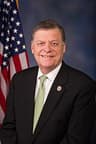
Tom Cole (R-OK)
A Republican bill with no cosponsors
Last activity — Became Public Law No: 119-4.
Became law
Passed both chambers and was signed by the President, or became law without a signature.
Nothing more in Congress: it is law. When it takes effect depends on the dates written into it — some parts start at once, others a year or more later.
The Full-Year Continuing Appropriations and Extensions Act, 2025, provides funding and extensions for various government agencies through September 30, 2025. It includes specific funding levels for departments such as Agriculture, Defense, Energy, Homeland Security, and Transportation. The legislation extends various public health and Medicare programs, including community health centers, telehealth flexibilities, and coverage for oral antiviral drugs. It also includes provisions for military construction, veterans' benefits, and legislative branch operations. Additionally, the act addresses specific agricultural, science, and energy-related programs while extending several human services and Medicaid provisions.
Would veterans be better off under this, taking everything together?
The act provides significant funding for Veterans Affairs medical and community care.
Does this increase the pay, pensions or support veterans receive?
The act provides significant funding for VA Medical Services and the Cost of War Toxic Exposure Fund.
Does this help veterans get medical care?
Significant funding is provided for Veterans Affairs Medical Services and Community Care.
Does this put more money into scientific research?
The bill reduces funding for various research accounts including the NIH Innovation Account.
Does this reduce what the federal government owes?
The bill includes various permanent rescissions of previously allocated funds.
Does this reduce what the federal government spends?
The bill includes several rescissions across multiple departments.
4 recorded votes have been taken on this bill. 2 of them decided something; the rest moved it along.
03/11/2025 · Roll call 70 · recorded as “On Passage”
03/14/2025 · Roll call 133 · recorded as “On Passage of the Bill H.R. 1968”
03/11/2025 · Roll call 69 · recorded as “On Motion to Recommit”
03/14/2025 · Roll call 128 · recorded as “On the Cloture Motion H.R. 1968”
Health Care Access and Extensions: The bill extends funding for community health centers, the National Health Service Corps, and teaching health centers (Sec. 2101). It also extends special diabetes programs for Type I and for Indians (Sec. 2102).
Medicare Protections: The act extends increased inpatient hospital payments for certain low-volume hospitals (Sec. 2201) and the Medicare-dependent hospital program (Sec. 2202). It also extends add-on payments for ambulance services (Sec. 2203) and certain telehealth flexibilities (Sec. 2207).
Mental Health Access: The bill delays the requirement for in-person visits for mental health services provided via telehealth, rural health clinics, and federally qualified health centers, moving the deadline from April 1, 2025, to October 1, 2025 (Section (d)).
Telehealth Flexibility: It extends the ability to use audio-only telehealth services and the use of telehealth for hospice care face-to-face encounters through September 30, 2025 (Sections (e) and (f)).
Acute Care at Home: The authority for the acute hospital care at home waiver is extended through September 30, 2025 (Section 2208).
Prescription Drug Coverage: The temporary inclusion of authorized oral antiviral drugs as covered Part D drugs is extended through September 30, 2025 (Section 2209).
Increased Medicare Funding: The Medicare Improvement Fund is increased from $1,251,000,000 to $1,804,000,000 (Section 2210).
Support for Low-Income Programs: Funding is extended for outreach and assistance for low-income programs through State Health Insurance Assistance Programs, Area Agencies on Aging, and Aging and Disability Resource Centers (Sec. 2205).
Rural Development: The bill provides funding for rural water and waste disposal (Sec. 1201) and includes funding for distance learning, telemedicine, and broadband programs in rural areas (Sec. 1201).
Veterans Benefits: The act provides significant funding for Veterans Affairs Medical Services, Medical Community Care, and the Cost of War Toxic Exposure Fund (Sec. 11109 and Sec. 11110).
Human Services Extensions: The bill extends funding for sexual risk avoidance education, personal responsibility education, and doubles the funding for family-to-family health information centers to $6,000,000 (Sections 2301, 2302, and 2303).
Medicaid Stability: The bill delays reductions in Medicaid Disproportionate Share Hospital (DSH) payments through 2028 (Section 2401).
Funding Reductions: Certain programs face reduced funding levels, such as the National Institutes of Health (NIH) Innovation Account, CURES Act (Sec. 1905) and the National Health Service Corps (Sec. 2101, via specific amount adjustments).
Rescissions: The bill includes various permanent rescissions of previously allocated funds across multiple departments, including the Department of Defense and the Department of Labor (Sec. 1416 and Sec. 1903).
Sequestration Adjustments: The bill alters the timing of Medicare sequestration, increasing the duration of one period to 10 months and decreasing another to 2 months (Section 2211).
Every group the model scored this bill for, from -10 to +10. Tap or hover a score for the reason it gave.
The text as it became law
The final version, on its way to the President
In the queue for a floor vote, with no date set
Rules Committee · Mar 11, 2025
Adopted
With no one objecting, no names recorded

Rand Paul (R-KY)· Mar 14, 2025
Failed
2773

Chris Van Hollen (D-MD)· Mar 14, 2025
Failed
4852

Jeff Merkley (D-OR)· Mar 14, 2025
Failed
4753

Tammy Duckworth (D-IL)· Mar 14, 2025
Failed
4753
2 bills Congress.gov lists as related to this one — companions in the other chamber, earlier versions, and bills this one absorbed or was folded into.