
A Democratic bill with 14 Democratic cosponsors · See all 14 cosponsors
Last activity — Referred to the House Committee on Education and Workforce.
In committee
Introduced and handed to a committee in the chamber it started in.
The committee holds it, and most bills are never heard from again. A hearing or a committee vote would be news; silence is the usual outcome, and it kills the bill without anyone voting against it.
Its path through Congress
- Introduced
- In Committee
What this bill would do
This bill is known as the American Apprenticeship Act. It allows the Secretary of Labor to make competitive grants to States to help pay for pre-apprenticeships and related instruction costs for qualified apprenticeship programs. Qualified apprenticeship programs are registered and concentrated in industry sectors or occupations representing less than 10 percent of apprenticeable occupations or national apprenticeship programs. States must submit an application and strategic plan to the Secretary to be eligible for these grants. The Federal share of the cost for these programs will be between 20 percent and 50 percent. The bill authorizes an appropriation of $15,000,000 for each of fiscal years 2026 through 2031 to carry out this Act.
Yes· 3 of 13
- Scored +6
Would veterans be better off under this, taking everything together?
The bill explicitly seeks to increase apprenticeship opportunities for veterans.
- Scored +6
Would people with disabilities be better off under this?
The bill includes individuals with disabilities as a priority group for increased opportunities.
- Scored +6
Is this likely to create jobs?
The bill funds pre-apprenticeship programs to prepare individuals for entry into high-demand industries.
The opposite
No question was scored the opposite.
Who it would affect, and how
Potential Positive Impacts for People
-
Tuition and Educational Material Assistance: Under Section 2(b)(4), States receiving grants can use the funds to cover the costs of tuition, fees, textbooks, equipment, curriculum development, and other required educational materials for related instruction, which directly eases the financial burden on individuals participating in these programs.
-
Expanded Opportunities for Underserved Populations: Under Section 2(b)(2)(F), States are required to outline strategies to increase pre-apprenticeship and apprenticeship opportunities for members of minority groups, youth, individuals with disabilities, veterans, and individuals with barriers to employment, which helps open doors for people who traditionally face difficulties finding work.
-
Protection Against Displacement: Under Section 2(a)(3)(C)(ii)(II), pre-apprenticeship programs must be carried out in a manner that does not displace a paid employee, ensuring that current workers do not lose their jobs to program participants.
Potential Negative Impacts for People
-
Potential Administrative Overhead: Under Section 2(b)(5), States are permitted to use up to 10 percent of their grant funds for administrative costs relating to carrying out the project, which means a portion of the taxpayer-funded money goes toward paperwork and management rather than directly to the people learning the skills.
-
Matching Fund Requirements: Under Section 2(c), the Federal share of the cost is capped between 20 percent and 50 percent, meaning States must come up with the remaining non-Federal share themselves through cash, in-kind contributions, or donations, which could burden State budgets or limit program availability in less wealthy areas.
Groups and Interests Ranking
Every group the model scored this bill for, from -10 to +10. Tap or hover a score for the reason it gave.
- Demographic And Interest Groups
- Would people with disabilities be better off under this? — The bill includes individuals with disabilities as a priority group for increased opportunities. Would veterans be better off under this, taking everything together? — The bill explicitly seeks to increase apprenticeship opportunities for veterans. Would households on low incomes be better off under this? — The bill provides financial assistance for training to help individuals overcome barriers to employment. Would children be better off under this? — The bill encourages increased opportunities for youth through pre-apprenticeship programs. Would Hispanic Americans be better off under this? — The bill targets increased opportunities for members of minority groups. Would Native Americans be better off under this? — The bill focuses on increasing opportunities for various minority populations. Would union members be better off under this? — The bill involves collaboration with labor-management entities and labor organizations.
- Social Issues And Justice
- Does this expand the rights of people with disabilities? — The bill specifically aims to increase apprenticeship opportunities for individuals with disabilities. Does this narrow racial gaps in how people are treated? — The bill directs states to increase opportunities for members of minority groups.
- Education And Technology
- Does this make college cost less? — The bill provides grants to defray costs like tuition, fees, and textbooks for pre-apprenticeship programs. Does this put more money into scientific research? — The bill includes information technology as a targeted industry for apprenticeship expansion.
- Economy And Finance
- Is this likely to create jobs? — The bill funds pre-apprenticeship programs to prepare individuals for entry into high-demand industries.
- Healthcare
- Does this make health care easier to get in general? — The bill targets healthcare as a key industry for expanding apprenticeship opportunities.
- 9/24/2026
- 1 Cosponsor added.
- 7/20/2026
- 1 Cosponsor added.
- 7/13/2026
- 2 Cosponsors added.
- 6/2/2026
- 1 Cosponsor added.
- 4/20/2026
- 1 Cosponsor added.
- 4/15/2026
- 1 Cosponsor added.
- 2/3/2026
- 1 Cosponsor added.
- 12/12/2025
- 1 Cosponsor added.
- 12/4/2025
- 1 Cosponsor added.
- 12/1/2025
- 1 Cosponsor added.
- 11/4/2025
- 1 Cosponsor added.
- 10/28/2025
- 1 Cosponsor added.
- 10/24/2025
- 1 Cosponsor added.
- 3/3/2025
- Referred to the House Committee on Education and Workforce.
- Introduced in House
One bill Congress.gov lists as related to this one — companions in the other chamber, earlier versions, and bills this one absorbed or was folded into.
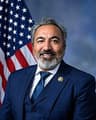 Ami Bera
Democrat · California
 André Carson
Democrat · Indiana
 Angie Craig
Democrat · Minnesota
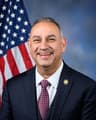 Gilbert Cisneros
Democrat · California
 Shomari Figures
Democrat · Alabama
 Adelita Grijalva
Democrat · Arizona
 Jahana Hayes
Democrat · Connecticut
 Raja Krishnamoorthi
Democrat · Illinois
 Greg Landsman
Democrat · Ohio
 Seth Moulton
Democrat · Massachusetts
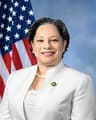 Jennifer McClellan
Democrat · Virginia
 Thomas Suozzi
Democrat · New York
 Mike Thompson
Democrat · California
 Shri Thanedar
Democrat · Michigan