
A Republican bill with 3 Democratic cosponsors · See all 9 cosponsors
Last activity — Referred to the Committee on Ways and Means, and in addition to the Committee on Energy and Commerce, for a period to be subsequently determined by the Speaker, in each case for consideration of such provisions as fall within the jurisdiction of the committee concerned.
In committee
Introduced and handed to a committee in the chamber it started in.
The committee holds it, and most bills are never heard from again. A hearing or a committee vote would be news; silence is the usual outcome, and it kills the bill without anyone voting against it.
Its path through Congress
- Introduced
- In Committee
What this bill would do
This bill, known as the ``Second Chances for Rural Hospitals Act,'' aims to amend title XVIII of the Social Security Act. The primary goal is to modify the criteria used for designating rural emergency hospitals under the Medicare program. It expands the definition of a rural emergency hospital to include certain facilities that previously operated as critical access hospitals or subsection (d) hospitals in rural areas but have since ceased operations. Additionally, the bill adjusts payment rules for these facilities. These changes are scheduled to take effect on January 1, 2027.
Yes· 3 of 4
- Scored +7
Would people in rural areas be better off under this?
The bill provides a pathway for former rural hospitals to re-enter the healthcare system as rural emergency hospitals.
- Scored +6
Does this make health care easier to get in general?
The bill facilitates the reopening or designation of former critical access or subsection (d) hospitals as rural emergency hospitals to improve access in rural areas.
- Scored +5
Does this put more money into Medicare, the health coverage for people over 65?
The bill expands the definition of rural emergency hospitals, allowing more facilities to potentially access Medicare payments.
The opposite
No question was scored the opposite.
Who it would affect, and how
Potential Positive Impacts for People
- Expanded Designation Opportunities: The bill allows certain facilities that were previously critical access hospitals or subsection (d) hospitals in rural areas—and that have ceased operations—to potentially qualify as rural emergency hospitals (Section 2(a)).
Potential Negative Impacts for People
-
Restricted Payment Increases: For certain facilities described in section 1861(kkk)(3)(B), a payment increase will not apply if the facility is located less than 35 miles away from the nearest hospital, critical access hospital, or rural emergency hospital (Section 2(b)).
-
Exclusions from Rural Emergency Hospital Status: The bill adds an exclusion for facilities described in section 1861(kkk)(3)(B) that are located less than 10 miles away from the nearest hospital, critical access hospital, or rural emergency hospital when determining status as a rural emergency hospital (Section 2(b)).
Groups and Interests Ranking
Every group the model scored this bill for, from -10 to +10. Tap or hover a score for the reason it gave.
- Healthcare
- Does this make health care easier to get in general? — The bill facilitates the reopening or designation of former critical access or subsection (d) hospitals as rural emergency hospitals to improve access in rural areas. Does this put more money into Medicare, the health coverage for people over 65? — The bill expands the definition of rural emergency hospitals, allowing more facilities to potentially access Medicare payments.
- Demographic And Interest Groups
- Would people in rural areas be better off under this? — The bill provides a pathway for former rural hospitals to re-enter the healthcare system as rural emergency hospitals. Would households on low incomes be better off under this? — Expanding rural hospital designations can improve local access to essential healthcare services for low-income residents.
- 3/16/2026
- 1 Cosponsor added.
- 12/16/2025
- 1 Cosponsor added.
- 7/10/2025
- 1 Cosponsor added.
- 5/6/2025
- 1 Cosponsor added.
- 3/14/2025
- 2 Cosponsors added.
- 3/6/2025
- 1 Cosponsor added.
- 3/3/2025
- Referred to the Committee on Ways and Means, and in addition to the Committee on Energy and Commerce, for a period to be subsequently determined by the Speaker, in each case for consideration of such provisions as fall within the jurisdiction of the committee concerned.
- 2 Cosponsors added.
- Introduced in House
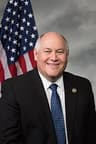 Ron Estes
Republican · Kansas
 Carol Miller
Republican · West Virginia
 Nathaniel Moran
Republican · Texas
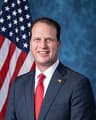 August Pfluger
Republican · Texas
 Pete Sessions
Republican · Texas
 Adrian Smith
Republican · Nebraska
 Melanie Stansbury
Democrat · New Mexico
 Bennie Thompson
Democrat · Mississippi
 Jill Tokuda
Democrat · Hawaii