
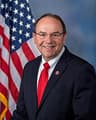
Christopher Smith (R-NJ)
China Trade Relations Act of 2025
A Republican bill with 2 Republican cosponsors · See all 2 cosponsors
Last activity — Referred to the Committee on Ways and Means, and in addition to the Committee on Rules, for a period to be subsequently determined by the Speaker, in each case for consideration of such provisions as fall within the jurisdiction of the committee concerned.
In committee
Introduced and handed to a committee in the chamber it started in.
The committee holds it, and most bills are never heard from again. A hearing or a committee vote would be news; silence is the usual outcome, and it kills the bill without anyone voting against it.
Its path through Congress
- Introduced
- In Committee
What this bill would do
The China Trade Relations Act of 2025 aims to withdraw normal trade relations treatment from the People's Republic of China. It would apply certain provisions of title IV of the Trade Act of 1974 to products from China instead. The bill expands the specific reasons why China might be ineligible for such trade treatment in the future. This includes new criteria related to human rights and economic practices. To regain trade benefits, the President must submit specific reports to Congress. The bill also includes mechanisms for presidential waivers and extensions of current status.
Yes
- Scored +6
Does this make patent and copyright rules fairer?
The bill creates trade ineligibility for China if it engages in systematic economic espionage or theft of intellectual property.
- Scored +5
Would union members be better off under this?
The bill strengthens protections against prison labor and mandates compliance with International Labour Organization standards.
- Scored +3
Does this narrow racial gaps in how people are treated?
The bill ties trade eligibility to the cessation of discriminatory practices such as forced abortions and sterilizations.
The opposite
- Scored -5
Does this make trade with other countries easier?
The bill removes normal trade relations treatment for products from the People's Republic of China, creating significant trade barriers.
Who it would affect, and how
Potential Positive Impacts for People
-
Human Rights Protections: The bill establishes that trade benefits are tied to specific human rights standards, such as protecting Tibet's cultural heritage and ensuring the humane treatment of prisoners (Section 3(a)(1)(A)(iii-ix)).
-
Labor Standards: It links trade eligibility to compliance with International Labour Organization standards and prohibitions against prison labor (Section 3(a)(1)(A)(iii-iv)).
-
Intellectual Property Protection: The bill creates a basis for ineligibility if there is systematic economic espionage or theft of intellectual property belonging to United States persons (Section 3(a)(1)(A)(viii)).
-
Protection of Freedom of Expression: The bill identifies the release of citizens detained for non-violent political or religious expression, including those related to Hong Kong and Taiwan, as a requirement for trade eligibility (Section 3(a)(1)(A)(ix)(III)).
Potential Negative Impacts for People
-
Trade Restrictions: The bill would withdraw normal trade relations treatment from products of the People's Republic of China, which could impact those involved in current trade (Section 2).
-
Financial and Commercial Restrictions: The bill prevents the People's Republic of China from participating in U.S. government programs that extend credits, credit guarantees, or investment guarantees, and prohibits the President from concluding commercial agreements during periods of ineligibility (Section 3(a)(1)(A)).
Groups and Interests Ranking
Every group the model scored this bill for, from -10 to +10. Tap or hover a score for the reason it gave.
- Education And Technology
- Does this make patent and copyright rules fairer? — The bill creates trade ineligibility for China if it engages in systematic economic espionage or theft of intellectual property.
- Demographic And Interest Groups
- Would union members be better off under this? — The bill strengthens protections against prison labor and mandates compliance with International Labour Organization standards.
- National Security And Foreign Policy
- Does this make trade with other countries easier? — The bill removes normal trade relations treatment for products from the People's Republic of China, creating significant trade barriers.
- Social Issues And Justice
- Does this narrow racial gaps in how people are treated? — The bill ties trade eligibility to the cessation of discriminatory practices such as forced abortions and sterilizations.
- 2/21/2025
- Referred to the Committee on Ways and Means, and in addition to the Committee on Rules, for a period to be subsequently determined by the Speaker, in each case for consideration of such provisions as fall within the jurisdiction of the committee concerned.
- 2 Cosponsors added.
- Introduced in House
 Andrew Ogles
Republican · Tennessee
 Thomas Tiffany
Republican · Wisconsin