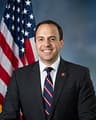
Lance Gooden (R-TX)
Protect America’s Innovation and Economic Security from CCP Act
A Republican bill with 13 Republican cosponsors · See all 13 cosponsors
Last activity — Placed on the Union Calendar, Calendar No. 607.
Cleared committee, waiting for its first floor vote
A committee approved it and it is on the calendar of the chamber it started in.
This is further than most bills get, and still no promise of a vote: the calendar is a queue, and the majority leadership decides what is called. A bill can sit here until the Congress ends.
Its path through Congress
- Introduced
- On Calendar
What this bill would do
This bill, called the "Protect America's Innovation and Economic Security from CCP Act," creates the CCP Initiative within the Department of Justice's National Security Division. The program aims to stop the Chinese Communist Party (CCP) from spying on academic institutions and stealing intellectual property. It focuses on prosecuting trade secret theft, hacking, and economic espionage. The initiative will also review risks from foreign investments in U.S. real estate and businesses. The Attorney General must provide an annual report on the program's progress. This Act is set to expire six years after it becomes law.
Yes· 3 of 9
- Scored +7
Does this better protect the country from computer attacks?
Prioritizes identifying and prosecuting hacking and economic espionage.
- Scored +6
Does this make patent and copyright rules fairer?
Strongly focuses on curbing theft of intellectual property.
- Scored +5
Does this give the federal government more power?
Establishes a new program within the DOJ's National Security Division with broad enforcement mandates.
The opposite· 3 of 4
- Scored -4
Does this favour talking over confrontation abroad?
Focuses on adversarial containment and prosecution of CCP-affiliated entities.
- Scored -3
Would immigrants be better off under this?
Stricter enforcement and review of foreign investments and technology transfers may negatively impact certain immigrant groups.
- Scored -2
Would Asian Americans be better off under this?
Increased scrutiny of researchers and technology transfers could disproportionately impact those with ties to the PRC.
Who it would affect, and how
Potential Positive Impacts for People
-
Protection of Intellectual Property: The bill aims to curb spying on U.S. intellectual property and academic institutions, which helps protect American innovations (Section 2(a)(1)).
-
National Security and Infrastructure: It seeks to protect critical U.S. infrastructure from supply chain compromises, insider threats, and foreign direct investment (Section 2(a)(4)(B)).
-
Criminal Accountability: The bill prioritizes the identification and criminal prosecution of those engaging in hacking, economic espionage, and trade secret theft (Section 2(a)(4)(A)).
-
Economic Security: By identifying theft of intellectual property from U.S. businesses, the bill works to secure American economic interests (Section 2(a)(4)(C)).
Potential Negative Impacts for People
-
Targeting of Researchers: The bill develops an enforcement strategy against "nontraditional collectors," specifically mentioning researchers in universities and labs who transfer technology to PRC-based entities (Section 2(a)(2)).
-
Investment Restrictions: The initiative will take action to address risks from foreign investments in U.S. businesses and real estate, which could limit certain investment activities (Section 2(a)(3)).
Groups and Interests Ranking
Every group the model scored this bill for, from -10 to +10. Tap or hover a score for the reason it gave.
- Education And Technology
- Does this make patent and copyright rules fairer? — Strongly focuses on curbing theft of intellectual property. Does this give people more control over their personal data? — Targets hacking and theft of sensitive technologies.
- Governance And Ideology
- Does this give the federal government more power? — Establishes a new program within the DOJ's National Security Division with broad enforcement mandates. Does this make what the government does easier for the public to see? — Requires an annual report to Congress on the program's progress.
- National Security And Foreign Policy
- Does this better protect the country from computer attacks? — Prioritizes identifying and prosecuting hacking and economic espionage. Does this give the government more power to monitor people inside the country? — Increases DOJ's investigative and enforcement capabilities regarding foreign influence and technology transfer. Does this favour talking over confrontation abroad? — Focuses on adversarial containment and prosecution of CCP-affiliated entities.
- Economy And Finance
- Is this likely to grow the economy? — Protects intellectual property and economic security from foreign theft, potentially fostering domestic innovation. Does this make it easier to run a small business? — Protects U.S. businesses from intellectual property theft and economic espionage.
- Demographic And Interest Groups
- Would business owners be better off under this? — Protects business owners from trade secret theft and intellectual property theft. Would immigrants be better off under this? — Stricter enforcement and review of foreign investments and technology transfers may negatively impact certain immigrant groups. Would Asian Americans be better off under this? — Increased scrutiny of researchers and technology transfers could disproportionately impact those with ties to the PRC. Would students be better off under this? — Researchers and students may face increased surveillance or scrutiny regarding technology transfers.
- 6/15/2026
- Reported (Amended) by the Committee on Judiciary. H. Rept. 119-699.
- Placed on the Union Calendar, Calendar No. 607.
- 3/26/2026
- Committee Consideration and Mark-up Session Held
- Ordered to be Reported (Amended) by the Yeas and Nays: 14 - 9.
- 5/21/2025
- 1 Cosponsor added.
- 3/11/2025
- 1 Cosponsor added.
- 3/3/2025
- 1 Cosponsor added.
- 2/26/2025
- 4 Cosponsors added.
- 2/21/2025
- Referred to the House Committee on the Judiciary.
- 6 Cosponsors added.
- Introduced in House
2 bills Congress.gov lists as related to this one — companions in the other chamber, earlier versions, and bills this one absorbed or was folded into.
 Lauren Boebert
Republican · Colorado
 Ben Cline
Republican · Virginia
 Pat Fallon
Republican · Texas
 Scott Franklin
Republican · Florida
 Jennifer Kiggans
Republican · Virginia
 Mike Kennedy
Republican · Utah
 Darin LaHood
Republican · Illinois
 Mark Messmer
Republican · Indiana
 Andrew Ogles
Republican · Tennessee
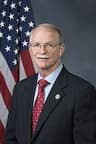 John Rutherford
Republican · Florida
 Adrian Smith
Republican · Nebraska
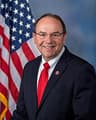 Thomas Tiffany
Republican · Wisconsin
 Rudy Yakym
Republican · Indiana