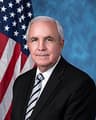
Carlos Gimenez (R-FL)
Keep China Out of Solar Energy Act of 2025
A Republican bill with 1 Republican cosponsor · See the cosponsor
Last activity — Referred to the House Committee on Oversight and Government Reform.
In committee
Introduced and handed to a committee in the chamber it started in.
The committee holds it, and most bills are never heard from again. A hearing or a committee vote would be news; silence is the usual outcome, and it kills the bill without anyone voting against it.
Its path through Congress
- Introduced
- In Committee
What this bill would do
The "Keep China Out of Solar Energy Act of 2025" seeks to stop the procurement of solar panels manufactured or assembled in the People's Republic of China. It directs the Office of Management and Budget and the General Services Administration to develop standards that prohibit Federal funds and government purchase cards from being used for these products. The Federal Acquisition Regulation will also be amended to implement these restrictions. While agencies can request waivers if a covered entity is the only viable source, these require joint approval from the Secretary of State and the Secretary of Homeland Security. Additionally, the bill mandates a report from the Comptroller General regarding solar panel procurement and requires an independent study on the domestic solar market.
Yes· 3 of 8
- Scored +3
Would business owners be better off under this?
Domestic solar manufacturers and businesses would benefit from reduced competition from Chinese entities.
- Scored +3
Is this likely to create jobs?
The bill aims to bolster the domestic solar market and workforce through targeted procurement restrictions.
- Scored +2
Would union members be better off under this?
By promoting a domestic market, the bill could potentially support the growth of domestic labor and unions.
The opposite
- Scored -2
Does this make trade with other countries easier?
The bill imposes trade-related procurement restrictions targeting specific foreign entities.
Who it would affect, and how
Potential Positive Impacts for People
-
Increased oversight of Federal spending: The bill requires the Director of the Office of Management and Budget to develop standards to prohibit Federal funds, contracts, and purchase cards from being used to buy solar panels from covered entities (Section 2).
-
Transparency in procurement practices: The Comptroller General is required to submit a report to Congress regarding the amount of solar panels currently being procured by Federal departments and agencies from covered entities (Section 4).
-
Data-driven insights into the energy market: The bill mandates a study through a federally funded research and development center to examine the domestic solar market, technological advancement capabilities, and the global supply chain and workforce (Section 5).
Potential Negative Impacts for People
-
Potential supply limitations for Federal agencies: While a waiver process exists, an agency head can only obtain one if they certify that the covered entity is the "only viable source" and receive joint approval from both the Secretary of State and the Secretary of Homeland Security (Section 3).
-
Increased administrative requirements: The bill establishes several reporting and notification duties, such as requiring the Director of the Office of Management and Budget to submit quarterly reports to congressional committees regarding waiver requests (Section 3).
Groups and Interests Ranking
Every group the model scored this bill for, from -10 to +10. Tap or hover a score for the reason it gave.
- Demographic And Interest Groups
- Would business owners be better off under this? — Domestic solar manufacturers and businesses would benefit from reduced competition from Chinese entities. Would union members be better off under this? — By promoting a domestic market, the bill could potentially support the growth of domestic labor and unions.
- Economy And Finance
- Is this likely to create jobs? — The bill aims to bolster the domestic solar market and workforce through targeted procurement restrictions. Is this likely to grow the economy? — By stimulating the domestic solar industry, it may contribute to long-term industrial growth.
- Governance And Ideology
- Does this make what the government does easier for the public to see? — The bill mandates report submissions to Congress regarding procurement and waiver requests. Does this give the federal government more power? — The bill increases federal oversight and control over procurement standards and agency waiver processes.
- Environment Energy And Infrastructure
- Does this put more money into wind, solar and other renewable power? — The bill encourages investment in the domestic solar energy market.
- National Security And Foreign Policy
- Does this make trade with other countries easier? — The bill imposes trade-related procurement restrictions targeting specific foreign entities.
- Education And Technology
- Does this put more money into scientific research? — The bill mandates an independent study of the solar market and technological advancement.
- 2/18/2025
- 1 Cosponsor added.
- 2/10/2025
- Referred to the House Committee on Oversight and Government Reform.
- Introduced in House
One bill Congress.gov lists as related to this one — companions in the other chamber, earlier versions, and bills this one absorbed or was folded into.
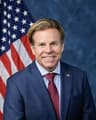 Mike Haridopolos
Republican · Florida