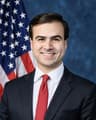
Pablo Hernández (D-PR)
Medicare Low Income Subsidy Equality Act of 2026
A Democratic bill with 1 Republican cosponsor · See all 3 cosponsors
Last activity — Referred to the Committee on Energy and Commerce, and in addition to the Committee on Ways and Means, for a period to be subsequently determined by the Speaker, in each case for consideration of such provisions as fall within the jurisdiction of the committee concerned.
In committee
Introduced and handed to a committee in the chamber it started in.
The committee holds it, and most bills are never heard from again. A hearing or a committee vote would be news; silence is the usual outcome, and it kills the bill without anyone voting against it.
Its path through Congress
- Introduced
- In Committee
What this bill would do
The bill is titled the "Medicare Low Income Subsidy Equality Act of 2026". It amends titles XVIII and XIX of the Social Security Act. The purpose is to make premium and cost-sharing subsidies available to low-income Medicare part D beneficiaries who reside in Puerto Rico or another territory of the United States. It also adjusts poverty line determinations and Medicaid assistance calculations for these territories starting in January 2027.
Yes· 3 of 9
- Scored +8
Would people over 65 be better off under this?
Older Medicare beneficiaries residing in Puerto Rico and other territories directly benefit from expanded prescription drug subsidies.
- Scored +8
Would households on low incomes be better off under this?
Low-income individuals in U.S. territories receive vital financial relief for prescription drug costs and improved eligibility standards.
- Scored +8
Does this lower the price of prescription medicines?
The bill extends Medicare Part D premium and cost-sharing subsidies to low-income beneficiaries in Puerto Rico and other U.S. territories.
The opposite
No question was scored the opposite.
Who it would affect, and how
Potential Positive Impacts for People
-
Section 2(a) makes premium and cost-sharing subsidies available to low-income Medicare part D beneficiaries who reside in the Commonwealth of Puerto Rico or another territory of the United States. This is positive because it helps individuals in the territories afford their necessary prescription drugs by lowering their out-of-pocket costs.
-
Section 2(a)(3) establishes that the poverty line applied to individuals residing outside the 50 States and the District of Columbia shall be the poverty line for the 48 contiguous States and the District of Columbia. This is positive because using the contiguous states' poverty line may qualify more low-income territory residents for financial assistance than local poverty lines would.
Potential Negative Impacts for People
- Based on the provided text, there are no specific sections or provisions identified that create negative consequences or burdens for individuals or groups of people in the United States.
Groups and Interests Ranking
Every group the model scored this bill for, from -10 to +10. Tap or hover a score for the reason it gave.
- Demographic And Interest Groups
- Would households on low incomes be better off under this? — Low-income individuals in U.S. territories receive vital financial relief for prescription drug costs and improved eligibility standards. Would people over 65 be better off under this? — Older Medicare beneficiaries residing in Puerto Rico and other territories directly benefit from expanded prescription drug subsidies. Would Hispanic Americans be better off under this? — The legislation significantly benefits the predominantly Hispanic population of Puerto Rico by granting equal treatment in federal healthcare subsidies. Would middle-income households be better off under this? — Some moderate-income residents in the territories may benefit from broader federal health subsidy adjustments.
- Healthcare
- Does this lower the price of prescription medicines? — The bill extends Medicare Part D premium and cost-sharing subsidies to low-income beneficiaries in Puerto Rico and other U.S. territories. Does this make health care easier to get in general? — By extending prescription drug subsidies and improving Medicaid and poverty line determinations, the bill enhances healthcare access for residents of U.S. territories. Does this put more money into Medicaid, the health coverage for people on low incomes? — The bill adjusts Medicaid assistance calculations and increases funding provisions for U.S. territories starting in 2027.
- Social Issues And Justice
- Is this likely to lift people out of poverty? — The bill applies the contiguous states' poverty line for eligibility determinations, allowing more low-income territory residents to qualify for financial assistance.
- Governance And Ideology
- Does this give the federal government more power? — The legislation expands federal Medicare and Medicaid program rules and subsidy frameworks into U.S. territories.
- 11/2/2026
- 1 Cosponsor added.
- 10/22/2026
- Referred to the Committee on Energy and Commerce, and in addition to the Committee on Ways and Means, for a period to be subsequently determined by the Speaker, in each case for consideration of such provisions as fall within the jurisdiction of the committee concerned.
- 2 Cosponsors added.
- Introduced in House
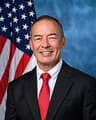 James Moylan
Republican · Guam
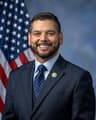 Raul Ruiz
Democrat · California
 Darren Soto
Democrat · Florida