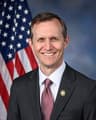
George Whitesides (D-CA)
Public Safety Power Shutoff Data Transparency Act
A Democratic bill with no cosponsors
Last activity — Referred to the House Committee on Energy and Commerce.
In committee
Introduced and handed to a committee in the chamber it started in.
The committee holds it, and most bills are never heard from again. A hearing or a committee vote would be news; silence is the usual outcome, and it kills the bill without anyone voting against it.
Its path through Congress
- Introduced
- In Committee
What this bill would do
This bill directs the Secretary of Energy to establish a Public Safety Power Shutoff Event Reporting Program within the Office of Cybersecurity, Energy Security, and Emergency Response. Under this program, covered electric utilities must report specific details regarding any public safety power shutoff event to the Secretary within set timeframes. The Secretary is required to publish quarterly, anonymized, and aggregated summaries of this reported information on a publicly accessible website. Additionally, the Secretary must share the reported information and published summaries with relevant federal and state entities. The bill also provides specific protections and exemptions from disclosure for the information reported by the utilities, while establishing enforcement measures for failing to report.
Yes· 3 of 19
- Scored +6
Does this make what the government does easier for the public to see?
The bill requires the Department of Energy to publish quarterly, anonymized, and aggregated summaries of public safety power shutoffs on a publicly accessible website.
- Scored +5
Does this improve help for people hit by a disaster?
The Secretary of Energy is required to share power shutoff information and machine-readable summaries directly with FEMA and state and local emergency management agencies.
- Scored +4
Would people in rural areas be better off under this?
The bill explicitly focuses on capturing and addressing the impacts of power shutoffs on rural and wildfire-prone communities.
The opposite
- Scored -2
Would business owners be better off under this?
Covered electric utilities face strict reporting requirements and enforcement measures under the bill.
- Scored -2
Does this make it easier to run a small business?
The bill imposes new mandatory reporting requirements on electric utilities following power shutoff events, which could create administrative burdens for smaller utility operators.
Who it would affect, and how
Potential Positive Impacts for People
-
Transparency for Affected Communities: Under Section 2(d), the Secretary of Energy must publish quarterly, anonymized, and aggregated summaries of power shutoff events on a publicly accessible website, which includes data on frequency, duration, regional trends, and effects on rural, low-income, and Tribal areas. This gives the people clear, accessible insights into how often power shutoffs happen and how they impact vulnerable communities.
-
Improved Emergency Preparedness: According to Section 2(d), the Secretary must make published summaries available in a machine-readable format to state and local emergency-management agencies. This helps local officials improve public alerting and preparedness during power shutoff events.
-
Protection of Critical Health Infrastructure: Section 2(b) requires utilities to report on advance notifications provided to and consultations conducted with hospitals and other critical health infrastructure. This provision highlights the focus on ensuring that life-saving medical facilities are properly notified and considered during a power shutoff.
-
Local Government and Tribal Voice: Section 2(d) requires the Secretary to provide a mechanism for local governments and Tribal entities to submit verified feedback or supplemental data on the impacts of power shutoffs. This gives local officials a direct way to hold utilities accountable and inform best practices.
Potential Negative Impacts for People
-
Burden on Utilities: Under Section 2(b), covered electric utilities must file detailed reports within seven days of initiating and ending a public safety power shutoff event, covering everything from geographic extent to coordination efforts. While meant for accountability, these heavy reporting requirements could potentially strain smaller utility operations.
-
Shielding Utility Information: Section 2(f) grants reporting utilities a safe harbor that exempts the reported information from the Freedom of Information Act and restricts its use in civil actions without the utility's written consent. Everyday citizens seeking to hold a utility legally accountable might find it harder to access specific raw data because of these strict protections.
Groups and Interests Ranking
Every group the model scored this bill for, from -10 to +10. Tap or hover a score for the reason it gave.
- Demographic And Interest Groups
- Would people in rural areas be better off under this? — The bill explicitly focuses on capturing and addressing the impacts of power shutoffs on rural and wildfire-prone communities. Would households on low incomes be better off under this? — The program requires tracking and reporting on the estimated impacts of power shutoffs on low-income and underserved communities. Would Native Americans be better off under this? — The legislation specifically mandates that reports and summaries include data on the effects of power shutoffs in Tribal areas and provides a feedback mechanism for Tribal entities. Would farmers be better off under this? — The bill mandates tracking and reporting on power shutoff impacts in rural communities where farming operations are often affected. Would people with disabilities be better off under this? — Improved emergency management integration and tracking of vulnerable infrastructure help protect individuals with medical needs requiring continuous power. Would people over 65 be better off under this? — Enhanced coordination and reporting regarding critical health infrastructure and vulnerable communities help protect seniors who depend on uninterrupted power. Would people in cities be better off under this? — Urban residents benefit from increased transparency and emergency management access to public safety power shutoff data. Would veterans be better off under this, taking everything together? — Ensuring better coordination with hospitals and emergency services during power shutoffs supports veterans who rely on these facilities. Would business owners be better off under this? — Covered electric utilities face strict reporting requirements and enforcement measures under the bill.
- Environment Energy And Infrastructure
- Does this improve help for people hit by a disaster? — The Secretary of Energy is required to share power shutoff information and machine-readable summaries directly with FEMA and state and local emergency management agencies. Does this better protect air, water and wildlife? — The bill establishes a formal reporting program for public safety power shutoffs undertaken to reduce the risk of wildfires during hazardous weather conditions. Does this invest in rural communities? — The program explicitly tracks and summarizes the impacts of power shutoffs on rural and infrastructure-vulnerable communities.
- Governance And Ideology
- Does this make what the government does easier for the public to see? — The bill requires the Department of Energy to publish quarterly, anonymized, and aggregated summaries of public safety power shutoffs on a publicly accessible website. Does this give the federal government more power? — The legislation establishes a new federal reporting program managed by the Department of Energy with specific regulatory enforcement mechanisms.
- Healthcare
- Does this make health care easier to get in general? — The bill requires utilities to report on advance notifications and consultations with hospitals and critical health infrastructure, helping protect vital medical services during power shutoffs. Does this help veterans get medical care? — Better tracking and coordination around public safety power shutoffs help ensure continuity of critical infrastructure, including medical facilities serving veterans.
- Social Issues And Justice
- Does this make housing cost less? — Tracking impacts on low-income and vulnerable communities helps local officials better prepare for outages affecting residential areas. Is this likely to lift people out of poverty? — The program aggregates data on public safety power shutoffs affecting low-income areas, assisting officials in addressing disproportionate impacts. Is this likely to reduce homelessness? — Improved reporting and emergency management coordination assist vulnerable populations during planned power shutoff events.
- Economy And Finance
- Does this make it easier to run a small business? — The bill imposes new mandatory reporting requirements on electric utilities following power shutoff events, which could create administrative burdens for smaller utility operators.
- National Security And Foreign Policy
- Does this better protect the country from computer attacks? — The reporting program is established within the Office of Cybersecurity, Energy Security, and Emergency Response, integrating outage metrics with security frameworks.
- 10/19/2026
- Referred to the House Committee on Energy and Commerce.
- Introduced in House