
Shontel Brown (D-OH)
Securing Elections From AI Deception Act
A Democratic bill with 34 Democratic cosponsors · See all 34 cosponsors
Last activity — Referred to the House Committee on Energy and Commerce.
In committee
Introduced and handed to a committee in the chamber it started in.
The committee holds it, and most bills are never heard from again. A hearing or a committee vote would be news; silence is the usual outcome, and it kills the bill without anyone voting against it.
Its path through Congress
- Introduced
- In Committee
What this bill would do
This bill is called the Securing Elections From AI Deception Act. It stops people from using artificial intelligence to trick or stop individuals from voting. The bill requires clear disclaimers on AI-generated election content like candidate videos, audio, or voting rules. Developers and deployers must also make sure their algorithms are safe and effective. The Federal Trade Commission will enforce these rules and educate the public. Anyone who breaks the voting interference rules can face fines or up to one year in prison.
Yes· 3 of 16
- Scored +7
Does this make elections run better?
The legislation safeguards election integrity by requiring transparent disclaimers on AI-generated election content and penalizing deceptive practices.
- Scored +7
Does this put more rules on large technology companies?
The bill imposes new regulatory requirements, mandatory disclaimers, and a duty of care on developers and deployers of artificial intelligence algorithms.
- Scored +7
Does this protect the right to vote?
The bill directly protects voting rights by prohibiting the use of artificial intelligence to deceive or interfere with voters and election workers.
The opposite
- Scored -4
Does this shorten or soften prison sentences?
The bill introduces strict penalties including fines and up to one year in prison for individuals who violate the artificial intelligence voting interference prohibitions.
Who it would affect, and how
Potential Positive Impacts for People
-
Protection Against Voting Fraud: Section 3 prohibits using artificial intelligence to intentionally deprive or defraud individuals of their right to vote. This protects people from deceptive information about voting times, places, rules, or candidate endorsements.
-
Clear AI Disclaimers: Section 4 requires deployers of AI-generated content to include a clear disclaimer or an AI symbol on altered images, altered candidate voices, or voting information. This helps people easily spot synthetic or fake media.
-
Safety Standards: Section 5 creates a duty of care that stops developers and deployers from using algorithms in ways that are not safe and effective. This ensures companies take reasonable steps to prevent harm and deceptive practices before putting algorithms to use.
Potential Negative Impacts for People
- Potential Fines and Prison Time: Section 3 states that anyone who violates the prohibition on using artificial intelligence to interfere with voting can be fined, imprisoned for not more than 1 year, or both. This imposes strict legal burdens and penalties on individuals who break the law.
Groups and Interests Ranking
Every group the model scored this bill for, from -10 to +10. Tap or hover a score for the reason it gave.
- Demographic And Interest Groups
- Would Black Americans be better off under this? — The prohibition against using artificial intelligence to spread disinformation about voting requirements helps protect minority communities from targeted voter suppression. Would Hispanic Americans be better off under this? — Hispanic Americans are better safeguarded against deceptive AI campaigns intended to mislead voters regarding registration and ballot casting. Would households on low incomes be better off under this? — Low-income households benefit from robust protections ensuring their access to accurate voting information is not undermined by deceptive technology. Would people in middle age be better off under this? — Middle-aged voters gain greater protection against deceptive artificial intelligence tactics designed to interfere with their right to vote. Would middle-income households be better off under this? — Middle-class households are better protected against manipulative artificial intelligence practices that threaten democratic participation. Would people with disabilities be better off under this? — The Federal Trade Commission is directed to ensure that AI disclaimer regulations are fully accessible to persons with disabilities. Would people over 65 be better off under this? — Seniors are protected from fraudulent AI-generated election content that could misinform them about voting procedures and eligibility. Would people in their twenties and thirties be better off under this? — Young adults benefit from increased transparency and protection against misleading digital information and deepfakes during elections.
- Governance And Ideology
- Does this make elections run better? — The legislation safeguards election integrity by requiring transparent disclaimers on AI-generated election content and penalizing deceptive practices. Does this make what the government does easier for the public to see? — The bill mandates public education efforts by the Federal Trade Commission and clear labeling requirements for synthetic election media to keep the public informed. Does this give the federal government more power? — The bill expands federal oversight by empowering the Federal Trade Commission to enforce new regulations and public education campaigns regarding artificial intelligence.
- Education And Technology
- Does this put more rules on large technology companies? — The bill imposes new regulatory requirements, mandatory disclaimers, and a duty of care on developers and deployers of artificial intelligence algorithms. Does this give people more control over their personal data? — The legislation mandates safety and evaluation standards for algorithms, requiring appropriate data use and pre-deployment assessments.
- Social Issues And Justice
- Does this protect the right to vote? — The bill directly protects voting rights by prohibiting the use of artificial intelligence to deceive or interfere with voters and election workers. Does this make casting a ballot easier in practice? — By preventing deceptive information regarding voting times, places, and rules, the bill helps ensure voters can access the ballot without artificial interference. Does this shorten or soften prison sentences? — The bill introduces strict penalties including fines and up to one year in prison for individuals who violate the artificial intelligence voting interference prohibitions.
- Economy And Finance
- Does this give people more protection from unfair business practices? — The bill enhances consumer protection by regulating deceptive artificial intelligence content and establishing clear safety standards for algorithms.
- 11/2/2026
- 1 Cosponsor added.
- 10/22/2026
- 3 Cosponsors added.
- 10/19/2026
- Referred to the House Committee on Energy and Commerce.
- 30 Cosponsors added.
- Introduced in House
One bill Congress.gov lists as related to this one — companions in the other chamber, earlier versions, and bills this one absorbed or was folded into.
 Yassamin Ansari
Democrat · Arizona
 Sanford Bishop
Democrat · Georgia
 Ed Case
Democrat · Hawaii
 André Carson
Democrat · Indiana
 Salud Carbajal
Democrat · California
 Angie Craig
Democrat · Minnesota
 Jasmine Crockett
Democrat · Texas
 Christopher Deluzio
Democrat · Pennsylvania
 Debbie Dingell
Democrat · Michigan
 Dwight Evans
Democrat · Pennsylvania
 Valerie Foushee
Democrat · North Carolina
 Josh Gottheimer
Democrat · New Jersey
 Robert Garcia
Democrat · California
 Daniel Goldman
Democrat · New York
 Adelita Grijalva
Democrat · Arizona
 Jared Huffman
Democrat · California
 Jahana Hayes
Democrat · Connecticut
 Raja Krishnamoorthi
Democrat · Illinois
 Stephen Lynch
Democrat · Massachusetts
 Summer Lee
Democrat · Pennsylvania
 Morgan McGarvey
Democrat · Kentucky
 Seth Magaziner
Democrat · Rhode Island
 Mark Pocan
Democrat · Wisconsin
 Ayanna Pressley
Democrat · Massachusetts
 Marilyn Strickland
Democrat · Washington
 Melanie Stansbury
Democrat · New Mexico
 Hillary Scholten
Democrat · Michigan
 Emilia Sykes
Democrat · Ohio
 Dina Titus
Democrat · Nevada
 Paul Tonko
Democrat · New York
 Marc Veasey
Democrat · Texas
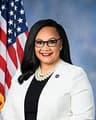 Nikema Williams
Democrat · Georgia
 Frederica Wilson
Democrat · Florida
 Bonnie Watson Coleman
Democrat · New Jersey