
Gregory Meeks (D-NY)
Prohibit Corrupt Russia Oil Deals Act
A Democratic bill with 1 Republican cosponsor · See all 35 cosponsors
Last activity — Referred to the Committee on Foreign Affairs, and in addition to the Committees on the Judiciary, Financial Services, Ways and Means, Oversight and Government Reform, and Rules, for a period to be subsequently determined by the Speaker, in each case for consideration of such provisions as fall within the jurisdiction of the committee concerned.
In committee
Introduced and handed to a committee in the chamber it started in.
The committee holds it, and most bills are never heard from again. A hearing or a committee vote would be news; silence is the usual outcome, and it kills the bill without anyone voting against it.
Its path through Congress
- Introduced
- In Committee
What this bill would do
This bill is called the Prohibit Corrupt Russia Oil Deals Act. It stops the United States International Development Finance Corporation from supporting Russian energy deals. The bill cancels specific Treasury Department general licenses related to Russian crude oil, petroleum products, and diesel fuel. It forces the President to place asset-blocking and visa sanctions on Russian persons involved in oil and gas extraction, refinement, production, or maritime transportation. The bill also requires federal agencies to submit regular reports to Congress on Russian oil and the involvement of Russian energy companies in the abduction of Ukrainian children. Finally, these restrictions and review periods remain in effect until the Russian Federation ends its war in Ukraine and commits to a just peace settlement.
Yes· 3 of 7
- Scored +7
Does this strengthen ties with allied countries?
The bill strengthens alignment with allies by strictly cutting off financial and energy support for the Russian Federation's war efforts.
- Scored +6
Does this make what the government does easier for the public to see?
The legislation mandates regular reports to congressional committees on the implementation and impact of Russian general licenses and energy company involvement in child abductions.
- Scored +6
Does this reduce how much oil, gas and coal is produced?
The bill nullifies Treasury general licenses for Russian oil and petroleum products and prohibits DFC investments in Russian energy.
The opposite
- Scored -5
Is this likely to lower the price at the pump?
Restricting Russian oil and diesel imports and canceling general licenses can tighten global energy supplies and potentially raise pump prices.
- Scored -3
Would households on low incomes be better off under this?
Potential disruptions in global energy markets from strict oil sanctions could increase costs for everyday consumers.
- Scored -3
Would middle-income households be better off under this?
Broader sanctions on Russian energy sectors may trickle down to create economic burdens or higher prices for middle-class households.
Who it would affect, and how
Potential Positive Impacts for People
- Section 5(c)(2) contains an explicit exception stating that sanctions cannot stop transactions or the facilitation of transactions for the sale of agricultural commodities, food, medicine, or medical devices, or the provision of humanitarian assistance. This is positive because it ensures that humanitarian aid and basic survival needs for people are not blocked by the new sanctions.
Potential Negative Impacts for People
- Section 5(b) requires the President to impose asset blocking and visa bans on Russian persons involved in oil and gas extraction, refinement, production, or maritime transportation. While intended to target Russian actors, broad sanctions can sometimes create economic burdens or disruptions in global energy markets that trickle down to everyday consumers through higher prices.
Groups and Interests Ranking
Every group the model scored this bill for, from -10 to +10. Tap or hover a score for the reason it gave.
- National Security And Foreign Policy
- Does this strengthen ties with allied countries? — The bill strengthens alignment with allies by strictly cutting off financial and energy support for the Russian Federation's war efforts. Does this favour talking over confrontation abroad? — The legislation uses targeted sanctions and clear statutory conditions requiring Russia to end its war in Ukraine to lift restrictions. Does this put more money into stopping terrorism? — The bill imposes mandatory asset-blocking and visa sanctions on Russian energy actors, bolstering national security measures against foreign adversaries.
- Governance And Ideology
- Does this make what the government does easier for the public to see? — The legislation mandates regular reports to congressional committees on the implementation and impact of Russian general licenses and energy company involvement in child abductions. Does this give the federal government more power? — The bill expands federal executive and congressional authority regarding foreign sanctions, energy reviews, and licensing restrictions.
- Demographic And Interest Groups
- Would farmers be better off under this? — The bill includes explicit exceptions ensuring that sanctions do not block transactions for agricultural commodities and food. Would households on low incomes be better off under this? — Potential disruptions in global energy markets from strict oil sanctions could increase costs for everyday consumers. Would middle-income households be better off under this? — Broader sanctions on Russian energy sectors may trickle down to create economic burdens or higher prices for middle-class households.
- Environment Energy And Infrastructure
- Does this reduce how much oil, gas and coal is produced? — The bill nullifies Treasury general licenses for Russian oil and petroleum products and prohibits DFC investments in Russian energy. Is this likely to lower the price at the pump? — Restricting Russian oil and diesel imports and canceling general licenses can tighten global energy supplies and potentially raise pump prices.
- 11/9/2026
- 5 Cosponsors added.
- 10/22/2026
- 8 Cosponsors added.
- 10/19/2026
- 8 Cosponsors added.
- 10/15/2026
- Referred to the Committee on Foreign Affairs, and in addition to the Committees on the Judiciary, Financial Services, Ways and Means, Oversight and Government Reform, and Rules, for a period to be subsequently determined by the Speaker, in each case for consideration of such provisions as fall within the jurisdiction of the committee concerned.
- 14 Cosponsors added.
- Introduced in House
 Gabe Amo
Democrat · Rhode Island
 Ami Bera
Democrat · California
 Donald Beyer
Democrat · Virginia
 Don Bacon
Republican · Nebraska
 Wesley Bell
Democrat · Missouri
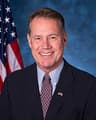 Ed Case
Democrat · Hawaii
 Jim Costa
Democrat · California
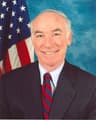 Joe Courtney
Democrat · Connecticut
 Jason Crow
Democrat · Colorado
 Debbie Dingell
Democrat · Michigan
 Madeleine Dean
Democrat · Pennsylvania
 Steny Hoyer
Democrat · Maryland
 Jonathan Jackson
Democrat · Illinois
 Julie Johnson
Democrat · Texas
 Marcy Kaptur
Democrat · Ohio
 William Keating
Democrat · Massachusetts
 Rick Larsen
Democrat · Washington
 Ted Lieu
Democrat · California
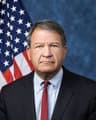 George Latimer
Democrat · New York
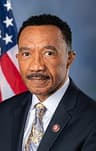 Kweisi Mfume
Democrat · Maryland
 Grace Meng
Democrat · New York
 Jared Moskowitz
Democrat · Florida
 Sarah McBride
Democrat · Delaware
 Richard Neal
Democrat · Massachusetts
 Johnny Olszewski
Democrat · Maryland
 Jimmy Panetta
Democrat · California
 Brittany Pettersen
Democrat · Colorado
 Deborah Ross
Democrat · North Carolina
 Brad Sherman
Democrat · California
 Bradley Schneider
Democrat · Illinois
 Greg Stanton
Democrat · Arizona
 Dina Titus
Democrat · Nevada
 Eugene Vindman
Democrat · Virginia
 Debbie Wasserman Schultz
Democrat · Florida
 James Walkinshaw
Democrat · Virginia