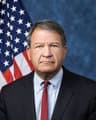
George Latimer (D-NY)
Stroke Education and EMS Care Improvement Act of 2026
A Democratic bill with 4 Democratic cosponsors · See all 4 cosponsors
Last activity — Referred to the House Committee on Energy and Commerce.
In committee
Introduced and handed to a committee in the chamber it started in.
The committee holds it, and most bills are never heard from again. A hearing or a committee vote would be news; silence is the usual outcome, and it kills the bill without anyone voting against it.
Its path through Congress
- Introduced
- In Committee
What this bill would do
This bill is known as the Stroke Education and EMS Care Improvement Act of 2026. It directs the Secretary of Health and Human Services to set up a national, standardized stroke education program for emergency medical services clinicians. The program aims to create a consistent, evidence-based curriculum covering stroke recognition, pre-hospital management, and transport protocols. It allows the Secretary to award competitive grants to State and local emergency medical services agencies, with a priority on underserved and rural areas. The bill also requires data collection, monitoring, and annual reports to Congress regarding the success of the program.
Yes· 3 of 18
- Scored +6
Would people in rural areas be better off under this?
The bill specifically directs competitive grants and priority resources to rural EMS systems with limited access to training.
- Scored +6
Does this make health care easier to get in general?
The bill establishes a national standardized stroke education program for EMS clinicians and prioritizes underserved and rural areas.
- Scored +5
Would people over 65 be better off under this?
Older adults, who experience a higher incidence of strokes, will benefit from improved pre-hospital emergency care and stroke recognition.
The opposite
No question was scored the opposite.
Who it would affect, and how
Potential Positive Impacts for People
-
Better Training for First Responders: Under Section 3(a) and Section 3(b), the Secretary must establish a National Standardized EMS Stroke Education Program to ensure national consistency in stroke education for paramedics, emergency medical technicians, and first responders. This is positive because it equips emergency workers with the knowledge to recognize stroke symptoms, perform timely assessments, and route patients properly.
-
Help for Rural and Underserved Communities: Under Section 3(c)(2) and Section 3(d), the Secretary can make competitive grants to State and local emergency medical services agencies, giving priority to those serving underserved and rural areas that face unique challenges and barriers to care. This is positive because it directs resources and technology access, such as online training modules and telemedicine support, to areas with limited healthcare access.
-
Tracking Progress and Accountability: Under Section 3(c)(3), the Secretary must track the effectiveness of the program by looking at the number of clinicians trained, patient mortality rates, and time to treatment, and must submit annual reports to Congress. This is positive because it holds officials accountable for the program's results and analyzes how disparities in stroke care are being addressed.
Potential Negative Impacts for People
Based on the provided text, there are no specific sections or provisions that outline negative consequences or burdens for individuals or groups of people in the United States.
Groups and Interests Ranking
Every group the model scored this bill for, from -10 to +10. Tap or hover a score for the reason it gave.
- Demographic And Interest Groups
- Would people in rural areas be better off under this? — The bill specifically directs competitive grants and priority resources to rural EMS systems with limited access to training. Would retired people be better off under this? — Retirees, being at a higher risk for strokes, will experience better health outcomes due to enhanced EMS training and response protocols. Would people over 65 be better off under this? — Older adults, who experience a higher incidence of strokes, will benefit from improved pre-hospital emergency care and stroke recognition. Would households on low incomes be better off under this? — The legislation prioritizes low-income urban and underserved areas that face unique barriers to timely stroke care. Would Black Americans be better off under this? — Targeting healthcare disparities and low-income urban areas helps address disproportionate stroke impacts in minority communities. Would Hispanic Americans be better off under this? — Focusing resources on underserved areas improves emergency medical responses in diverse and minority populations. Would Native Americans be better off under this? — The emphasis on rural and underserved areas extends vital emergency stroke training to remote Native American communities. Would veterans be better off under this, taking everything together? — Interagency collaboration with the Department of Veterans Affairs helps integrate specialized stroke care for veterans.
- Healthcare
- Does this make health care easier to get in general? — The bill establishes a national standardized stroke education program for EMS clinicians and prioritizes underserved and rural areas. Does this put more money into medical research? — The bill provides for data collection and analysis to measure the effectiveness of stroke care programs and outcomes. Does this help veterans get medical care? — The bill authorizes interagency collaboration with the Department of Veterans Affairs to coordinate stroke education and healthcare delivery.
- Governance And Ideology
- Does this make what the government does easier for the public to see? — The bill mandates annual reports to Congress tracking program effectiveness, patient outcomes, and state-by-state variations. Does this give the federal government more power? — The bill directs the federal Secretary of Health and Human Services to establish a national standardized EMS stroke education program.
- Environment Energy And Infrastructure
- Does this invest in rural communities? — The legislation explicitly prioritizes rural EMS agencies and systems with limited access to training resources for grant distribution.
- Social Issues And Justice
- Does this narrow racial gaps in how people are treated? — The bill aims to address healthcare disparities and improve access to stroke care in low-income urban areas with high stroke prevalence. Is this likely to lift people out of poverty? — By prioritizing underserved and low-income urban areas, the bill helps reduce barriers to critical healthcare for impoverished populations.
- Education And Technology
- Does this get reliable internet to more people? — The bill ensures program accessibility in remote areas through online training modules, telemedicine support, and digital tools.
- National Security And Foreign Policy
- Does this increase the pay, pensions or support veterans receive? — Collaboration with the Department of Veterans Affairs supports improved healthcare delivery and stroke training affecting veterans.
- 10/22/2026
- 1 Cosponsor added.
- 10/15/2026
- Referred to the House Committee on Energy and Commerce.
- 3 Cosponsors added.
- Introduced in House
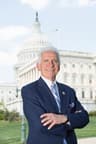 Jim Costa
Democrat · California
 Debbie Dingell
Democrat · Michigan
 Sarah McBride
Democrat · Delaware
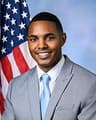 Ritchie Torres
Democrat · New York