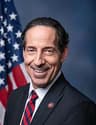
Jamie Raskin (D-MD)
Preserving and Remembering the History of Trump and other Tyrants Act
A Democratic bill with no cosponsors
Last activity — Referred to the Committee on House Administration, and in addition to the Committee on Natural Resources, for a period to be subsequently determined by the Speaker, in each case for consideration of such provisions as fall within the jurisdiction of the committee concerned.
In committee
Introduced and handed to a committee in the chamber it started in.
The committee holds it, and most bills are never heard from again. A hearing or a committee vote would be news; silence is the usual outcome, and it kills the bill without anyone voting against it.
Its path through Congress
- Introduced
- In Committee
What this bill would do
This bill is known as the Preserving and Remembering the History of Trump and other Tyrants Act. It directs the Secretary of the Smithsonian Institution to collect, preserve, and display a permanent exhibition in the National Museum of American History. The exhibition will feature artifacts reflecting governmental propaganda, corruption, and authoritarianism from the two presidencies of Donald J. Trump. The text lists specific types of items to collect, including certain signage, self-portrait banners, images, and personal narratives. The bill also requires specific accompanying signage and directs the Secretary of the Interior to remove or post alternative signs on National Park Service sidewalks. Finally, the legislation authorizes $5,000,000 to the Smithsonian Institution to carry out these activities.
Yes· 3 of 7
- Scored +4
Does this make what the government does easier for the public to see?
The legislation mandates clear public signage clarifying the constitutional boundaries and lack of congressional authorization for executive branch signs.
- Scored +3
Does this protect the individual right to speak freely?
The bill ensures that alternative congressional viewpoints are displayed alongside executive branch signage in public spaces.
- Scored +3
Does this protect what people are allowed to say in public life?
The legislation preserves personal narratives and resistance artifacts, supporting free expression against perceived authoritarianism.
The opposite· 3 of 5
- Scored -2
Does this reduce what the federal government spends?
The bill authorizes $5,000,000 in federal appropriations for the Smithsonian Institution to collect and display specific artifacts.
- Scored -1
Does this make the government pay for what it commits to?
The legislation allocates new federal funds for a specialized historical exhibit without offsetting revenue.
- Scored -1
Would households on low incomes be better off under this?
The authorization of $5,000,000 in federal spending imposes a minor financial burden on taxpayers.
Who it would affect, and how
Potential Positive Impacts for People
-
Section 2(a) and Section 2(b)(4) direct the collection and display of personal narratives of American citizens who resisted and opposed authoritarianism. This provides a platform for everyday people to have their experiences and historical resistance recognized and preserved for future generations.
-
Section 2(c) and Section 2(d)(2) require clear public signage explaining that unauthorized executive branch signs do not represent the views of the American people or their elected representatives in Congress. This provision helps hold elected officials accountable by clearly communicating the constitutional boundaries of power to the public.
Potential Negative Impacts for People
- Section 2(e) authorizes an appropriation of $5,000,000 to the Smithsonian Institution to carry out the requirements of the Act. This creates a direct financial burden on the taxpayers of the United States to fund the collection, preservation, and display of these specific artifacts and signs.
Groups and Interests Ranking
Every group the model scored this bill for, from -10 to +10. Tap or hover a score for the reason it gave.
- Governance And Ideology
- Does this make what the government does easier for the public to see? — The legislation mandates clear public signage clarifying the constitutional boundaries and lack of congressional authorization for executive branch signs. Does this protect the individual right to speak freely? — The bill ensures that alternative congressional viewpoints are displayed alongside executive branch signage in public spaces. Does this give the federal government more power? — The bill directs federal executive agencies and the Smithsonian to manage specific public signage and historical collections.
- Social Issues And Justice
- Does this protect what people are allowed to say in public life? — The legislation preserves personal narratives and resistance artifacts, supporting free expression against perceived authoritarianism. Does this narrow racial gaps in how people are treated? — The bill highlights and educates the public on historical movements countering white supremacy and authoritarianism.
- Economy And Finance
- Does this reduce what the federal government spends? — The bill authorizes $5,000,000 in federal appropriations for the Smithsonian Institution to collect and display specific artifacts. Does this make the government pay for what it commits to? — The legislation allocates new federal funds for a specialized historical exhibit without offsetting revenue.
- Education And Technology
- Does this put more money into public schools? — The bill provides federal resources to the Smithsonian Institution to expand educational exhibits on American history and governance.
- Demographic And Interest Groups
- Would Black Americans be better off under this? — The bill explicitly references and studies the history of white supremacy and the Confederacy in a critical educational context. Would high-income households be better off under this? — The authorization of $5,000,000 in federal spending imposes a minor financial burden on taxpayers. Would households on low incomes be better off under this? — The authorization of $5,000,000 in federal spending imposes a minor financial burden on taxpayers. Would middle-income households be better off under this? — The authorization of $5,000,000 in federal spending imposes a minor financial burden on taxpayers.
- 10/6/2026
- Referred to the Committee on House Administration, and in addition to the Committee on Natural Resources, for a period to be subsequently determined by the Speaker, in each case for consideration of such provisions as fall within the jurisdiction of the committee concerned.
- Introduced in House