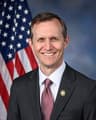
George Whitesides (D-CA)
Protecting Kids from Human-Like Chatbots Act
A Democratic bill with 2 Republican cosponsors · See all 4 cosponsors
Last activity — Referred to the Committee on Energy and Commerce, and in addition to the Committee on Science, Space, and Technology, for a period to be subsequently determined by the Speaker, in each case for consideration of such provisions as fall within the jurisdiction of the committee concerned.
In committee
Introduced and handed to a committee in the chamber it started in.
The committee holds it, and most bills are never heard from again. A hearing or a committee vote would be news; silence is the usual outcome, and it kills the bill without anyone voting against it.
Its path through Congress
- Introduced
- In Committee
What this bill would do
This bill is known as the Protecting Kids from Human-Like Chatbots Act. It sets up safety rules and design standards for artificial intelligence chatbots that minors can access. The bill requires developers and providers to use a non-personified default setting for minors. This setting stops chatbots from pretending to be human or forming emotional relationships with kids. Parents, legal guardians, and authorized educators are given control to manage these settings. The Federal Trade Commission and state attorneys general are responsible for enforcing these rules.
Yes· 3 of 7
- Scored +8
Would children be better off under this?
The bill directly protects children from emotional manipulation and deceptive personification by AI chatbots.
- Scored +8
Does this put more rules on large technology companies?
The bill places specific design and safety regulations on artificial intelligence chatbot developers and providers serving minors.
- Scored +6
Would students be better off under this?
The bill provides safe chatbot environments and allows authorized educators to manage school-managed deployments.
The opposite
No question was scored the opposite.
Who it would affect, and how
Potential Positive Impacts for People
-
Transparency for Minors: Section 2(a)(2)(A) requires chatbots accessed by minors to use a non-personified default setting from the start, ensuring the chatbot clearly states it is an artificial intelligence and not a human being. This protects children from being tricked into thinking they are talking to a real person.
-
Protection from Manipulation: Section 2(d)(1) prohibits developers and providers from nudging, prompting, or encouraging minors to disable the non-personified default setting. This stops companies from using tricks or design elements to push kids into turning off safety features.
-
Parental and Educator Control: Section 2(b)(1)(B) and Section 2(e) require providers to maintain a parental controls framework, giving parents or legal guardians exclusive authority to adjust chatbot settings, while also allowing authorized educators to make adjustments for bona fide educational purposes in school settings. This keeps adults in charge of what children experience.
Potential Negative Impacts for People
-
Burdens on Providers and Developers: Section 2(a) and Section 2(b) place strict compliance and design requirements on developers and providers to build and maintain specialized account frameworks and parental control systems. These technical demands could prove costly or difficult for smaller organizations to implement.
-
Risks of Over-Restriction: Section 2(b)(1)(E) forbids providers from modifying or interfering with the non-personified default setting through system-level instructions or interface design that fails statutory standards. This rigid control might limit the nuanced or creative responses users of any age might want from an AI tool.
Groups and Interests Ranking
Every group the model scored this bill for, from -10 to +10. Tap or hover a score for the reason it gave.
- Demographic And Interest Groups
- Would children be better off under this? — The bill directly protects children from emotional manipulation and deceptive personification by AI chatbots. Would students be better off under this? — The bill provides safe chatbot environments and allows authorized educators to manage school-managed deployments.
- Education And Technology
- Does this put more rules on large technology companies? — The bill places specific design and safety regulations on artificial intelligence chatbot developers and providers serving minors. Does this give people more control over their personal data? — The bill establishes stringent frameworks for managing minor account settings and parental controls.
- Governance And Ideology
- Does this make what the government does easier for the public to see? — The bill mandates that AI chatbots explicitly and conspicuously identify themselves as artificial intelligence systems to minors. Does this give the federal government more power? — The bill grants enforcement powers to the Federal Trade Commission over AI developers and providers.
- Economy And Finance
- Does this give people more protection from unfair business practices? — The bill protects minor consumers and their parents from deceptive AI chatbot manipulation and personification.
- 10/22/2026
- 1 Cosponsor added.
- 10/1/2026
- Referred to the Committee on Energy and Commerce, and in addition to the Committee on Science, Space, and Technology, for a period to be subsequently determined by the Speaker, in each case for consideration of such provisions as fall within the jurisdiction of the committee concerned.
- 3 Cosponsors added.
- Introduced in House
 Josh Gottheimer
Democrat · New Jersey
 Mike Kennedy
Republican · Utah
 Doris Matsui
Democrat · California
 Mariannette Miller-Meeks
Republican · Iowa