
A Democratic bill with 1 Republican cosponsor · See the cosponsor
Last activity — Referred to the House Committee on Energy and Commerce.
In committee
Introduced and handed to a committee in the chamber it started in.
The committee holds it, and most bills are never heard from again. A hearing or a committee vote would be news; silence is the usual outcome, and it kills the bill without anyone voting against it.
Its path through Congress
- Introduced
- In Committee
What this bill would do
This bill is known as the First Responder Behavioral Health Access Act. It updates the Public Health Service Act to include certain emergency response providers and public safety telecommunicators as eligible institutions for mental and behavioral health education and training grants. The legislation also establishes a three-year pilot program to award grants to help support the behavioral health needs of these first responders. Eligible entities can use these grant funds to embed licensed clinicians for confidential counseling, establish peer-to-peer programs, or train peer-to-peer behavioral health care providers. The bill prioritizes under-resourced providers and ensures an equitable geographic distribution of the funds. Finally, it authorizes $10,000,000 for each of fiscal years 2027 through 2029 to carry out the act.
Yes· 3 of 4
- Scored +8
Does this make mental health care easier to get?
The bill establishes a pilot program and expands grants to embed mental health clinicians and establish peer-to-peer counseling programs for first responders.
- Scored +6
Does this increase the pay, pensions or support veterans receive?
The bill supports the behavioral health and counseling needs of emergency response providers, which includes certain personnel who may be veterans.
- Scored +5
Would veterans be better off under this, taking everything together?
Many emergency responders are veterans, and the expanded behavioral health and counseling resources directly benefit them.
The opposite
- Scored -2
Does this reduce what the federal government spends?
The bill authorizes $10,000,000 in appropriations for each of fiscal years 2027 through 2029, increasing federal spending.
- Scored -2
Does this make the government pay for what it commits to?
Appropriating $10,000,000 annually for the grant program without offsetting revenue measures slightly reduces fiscal responsibility.
Who it would affect, and how
Potential Positive Impacts for People
-
Section 2: This section expands the existing mental and behavioral health education and training program to support the field placement and recruitment of clinicians and behavioral health service providers specifically in qualified emergency response provider settings. This is a positive step because it helps get mental health professionals directly where first responders work.
-
Section 3(b)(1): This provision allows grant funds to be used to embed licensed or certified clinicians with qualified emergency response providers to provide confidential counseling services. This is a good thing because it offers first responders a safe and private way to get mental health support.
-
Section 3(b)(2): This provision permits the establishment of peer-to-peer programs to provide counseling services in response to behavioral health incidents and at periodic intervals. This is beneficial because it allows first responders to lean on peers who truly understand the stress of the job.
-
Section 3(d): This section requires the Secretary to give priority to eligible entities seeking to assist qualified emergency response providers that are under-resourced regarding behavioral health care. This is a positive measure because it ensures that the communities and responders with the greatest need get help first.
Potential Negative Impacts for People
- Section 3(h): This provision authorizes the appropriation of $10,000,000 for each of fiscal years 2027 through 2029 to carry out the act. While the mental health support is needed, this spending adds to the federal budget and relies on taxpayer funds.
Groups and Interests Ranking
Every group the model scored this bill for, from -10 to +10. Tap or hover a score for the reason it gave.
- Healthcare
- Does this make mental health care easier to get? — The bill establishes a pilot program and expands grants to embed mental health clinicians and establish peer-to-peer counseling programs for first responders.
- National Security And Foreign Policy
- Does this increase the pay, pensions or support veterans receive? — The bill supports the behavioral health and counseling needs of emergency response providers, which includes certain personnel who may be veterans.
- Demographic And Interest Groups
- Would veterans be better off under this, taking everything together? — Many emergency responders are veterans, and the expanded behavioral health and counseling resources directly benefit them.
- Economy And Finance
- Does this make the government pay for what it commits to? — Appropriating $10,000,000 annually for the grant program without offsetting revenue measures slightly reduces fiscal responsibility. Does this reduce what the federal government spends? — The bill authorizes $10,000,000 in appropriations for each of fiscal years 2027 through 2029, increasing federal spending.
- Governance And Ideology
- Does this make what the government does easier for the public to see? — The bill requires a report to Congress on the pilot program's outcomes, contacts made, and providers trained, enhancing government accountability.
- 10/1/2026
- Referred to the House Committee on Energy and Commerce.
- 1 Cosponsor added.
- Introduced in House
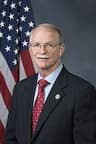 John Rutherford
Republican · Florida