
A Democratic bill with 1 Republican cosponsor · See all 2 cosponsors
Last activity — Referred to the House Committee on Natural Resources.
In committee
Introduced and handed to a committee in the chamber it started in.
The committee holds it, and most bills are never heard from again. A hearing or a committee vote would be news; silence is the usual outcome, and it kills the bill without anyone voting against it.
Its path through Congress
- Introduced
- In Committee
What this bill would do
This bill establishes a National Critical Minerals Council within the Executive Office of the President. The Council's main job is to develop and coordinate a national strategy for critical minerals and materials. It aims to secure minerals needed for energy security, economic opportunity, and national defense. The Council will work to reduce reliance on foreign adversaries and support domestic mineral sourcing. It also requires the Council to track foreign investments, consult with outside experts, and maintain a public dashboard for tracking projects.
Yes· 3 of 14
- Scored +5
Does this make what the government does easier for the public to see?
Section 2(o)(5)(L) requires maintaining a central, digitized public dashboard for tracking projects and housing data across federal agencies.
- Scored +4
Does this put more money into wind, solar and other renewable power?
Securing critical minerals is essential for energy security and the deployment of renewable energy technologies.
- Scored +4
Does this strengthen ties with allied countries?
The bill emphasizes collaborating with allied and partner nations and tracking agreements for resource exchange to reduce reliance on foreign adversaries.
The opposite
No question was scored the opposite.
Who it would affect, and how
Potential Positive Impacts for People
-
Transparency and Tracking: Section 2(o)(5)(L) requires the maintenance of a central, digitized dashboard accessible to the public, developers, and agency staff to track projects and house data across federal agencies. This is a positive step because it promotes transparency and allows everyday citizens to see what is happening with critical mineral projects.
-
Domestic Sourcing and Supply Security: Section 2(o)(2)(A), (D), and (E) focuses on securing critical materials for energy security and economic opportunity while reducing single points of failure in supply chains. This could benefit individuals by stabilizing supply chains and creating domestic economic opportunities.
-
Public Engagement and Consultation: Section 2(o)(5)(I) directs the Advisory Council to consult with outside experts, including mining schools, higher education institutions, Indian Tribes, and private industries. This provision ensures that diverse perspectives and best practices are considered in sourcing decisions.
Potential Negative Impacts for People
-
Potential Burdens and Lack of Explicit Protections: Based strictly on the provided text, the bill does not include specific provisions that explicitly create negative consequences, burdens, or penalties for individuals or groups of people in the United States.
-
Government Spending and Operations: The bill establishes a new council, designates a Chief Minerals Advisor, and mandates various interagency coordination duties, reports, and briefings without explicitly detailing the cost to taxpayers. While administrative, setting up new government machinery can sometimes add layers of bureaucracy without immediate, tangible benefits to the public.
Groups and Interests Ranking
Every group the model scored this bill for, from -10 to +10. Tap or hover a score for the reason it gave.
- Demographic And Interest Groups
- Would business owners be better off under this? — Business owners in the mining and critical materials sectors benefit from streamlined interagency policies and transparent funding opportunities. Would Native Americans be better off under this? — The Advisory Council is specifically mandated to consult with Indian Tribes regarding responsible critical minerals sourcing. Would people in rural areas be better off under this? — Increased domestic mining and mineral project sourcing will likely drive economic activity and job opportunities in rural regions. Would students be better off under this? — The bill coordinates education and workforce development efforts with mining schools and higher education institutions.
- Economy And Finance
- Is this likely to grow the economy? — By developing a national strategy to secure critical minerals for economic opportunity, the bill aims to stabilize and grow key domestic industries. Is this likely to create jobs? — The bill supports domestic mineral sourcing capacity and workforce development efforts, which can spur employment in the mining and critical materials sectors. Does this make it easier to run a small business? — The bill creates a central platform for viewing funding opportunities and consulting with private industries, which can assist businesses operating in the sector.
- Environment Energy And Infrastructure
- Does this put more money into wind, solar and other renewable power? — Securing critical minerals is essential for energy security and the deployment of renewable energy technologies. Does this invest in rural communities? — Critical mineral and mining projects are frequently located in rural areas, bringing economic investment and development to those communities.
- Governance And Ideology
- Does this make what the government does easier for the public to see? — Section 2(o)(5)(L) requires maintaining a central, digitized public dashboard for tracking projects and housing data across federal agencies. Does this give the federal government more power? — The legislation establishes a new National Critical Minerals Council within the Executive Office of the President and mandates interagency coordination.
- Education And Technology
- Does this put more money into scientific research? — The Council is tasked with coordinating research, development, and commercialization funding priorities across federal agencies. Does this put more money into public schools? — The bill directs consultation and coordination with mining schools and institutions of higher education for workforce development.
- National Security And Foreign Policy
- Does this strengthen ties with allied countries? — The bill emphasizes collaborating with allied and partner nations and tracking agreements for resource exchange to reduce reliance on foreign adversaries.
- 10/26/2026
- 1 Cosponsor added.
- 10/1/2026
- Referred to the House Committee on Natural Resources.
- 1 Cosponsor added.
- Introduced in House
One bill Congress.gov lists as related to this one — companions in the other chamber, earlier versions, and bills this one absorbed or was folded into.
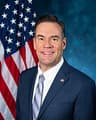 Russ Fulcher
Republican · Idaho
 Eugene Vindman
Democrat · Virginia