
Rick Larsen (D-WA)
America Votes Act of 2026
A Democratic bill with 8 Democratic cosponsors · See all 8 cosponsors
Last activity — Referred to the House Committee on House Administration.
In committee
Introduced and handed to a committee in the chamber it started in.
The committee holds it, and most bills are never heard from again. A hearing or a committee vote would be news; silence is the usual outcome, and it kills the bill without anyone voting against it.
Its path through Congress
- Introduced
- In Committee
What this bill would do
H.R. 10679, known as the America Votes Act of 2026, amends the Help America Vote Act of 2002. It allows individuals subject to voter identification requirements in Federal elections to meet those rules by using a sworn written statement. This statement can be used whether a person votes in person or by mail. States must provide pre-printed copies of these statements at polling places and include them with mail-in ballots. Additionally, voters who use this statement must be allowed to cast a regular ballot rather than a provisional ballot.
Yes· 3 of 8
- Scored +8
Does this make casting a ballot easier in practice?
States are required to provide pre-printed sworn statements at polling places and with mail-in ballots, making it easier to cast a regular ballot.
- Scored +7
Does this protect the right to vote?
The bill allows voters subject to identification requirements to use a sworn written statement to vote.
- Scored +6
Does this make elections run better?
The legislation establishes clear alternatives to standard voter ID and prevents the requirement for provisional ballots in those cases.
The opposite
- Scored -4
Does this leave more decisions to the states?
The bill imposes federal mandates on states regarding how they must accept identification alternatives for voting.
Who it would affect, and how
Potential Positive Impacts for People
-
Under section 303A(a)(1), individuals who are required to present identification to vote in a Federal election can meet that requirement by presenting a sworn written statement under penalty of perjury attesting to their identification and voter registration. This provides a clear alternative for people who may not have standard identification on hand.
-
Under section 303A(a)(2), States are required to prepare pre-printed copies of the sworn statement, make them available at polling places for in-person voters, and include a copy with each blank absentee or mail-in ballot. This ensures that voters have direct access to the paperwork needed to utilize this option.
-
Under section 303A(b), States are prohibited from forcing an individual who uses the sworn written statement to cast a provisional ballot under section 302. This means the individual's vote is treated directly as a regular ballot.
-
Under section 3, States must include information on how to use the sworn written statement in the voting information materials posted at polling places. This helps keep the public informed about their options while voting.
Potential Negative Impacts for People
- Under section 303A(a)(1)(A), the sworn written statement must be signed by the individual under penalty of perjury. This places a legal liability on individuals who sign the statement to attest to their identification and registration.
Groups and Interests Ranking
Every group the model scored this bill for, from -10 to +10. Tap or hover a score for the reason it gave.
- Demographic And Interest Groups
- Would households on low incomes be better off under this? — The bill benefits low-income individuals who may lack standard forms of identification by allowing a sworn statement. Would Black Americans be better off under this? — Providing alternative voting identification options helps minority voters who are disproportionately affected by strict ID laws. Would Hispanic Americans be better off under this? — Alternative voting identification methods assist Hispanic Americans who may face identification barriers. Would immigrants be better off under this? — Naturalized citizens and other immigrants who may experience hurdles obtaining standard ID can utilize the sworn statement.
- Social Issues And Justice
- Does this make casting a ballot easier in practice? — States are required to provide pre-printed sworn statements at polling places and with mail-in ballots, making it easier to cast a regular ballot. Does this protect the right to vote? — The bill allows voters subject to identification requirements to use a sworn written statement to vote.
- Governance And Ideology
- Does this make elections run better? — The legislation establishes clear alternatives to standard voter ID and prevents the requirement for provisional ballots in those cases. Does this make what the government does easier for the public to see? — States are required to include information on how to use the sworn written statement in voting materials posted at polling places. Does this leave more decisions to the states? — The bill imposes federal mandates on states regarding how they must accept identification alternatives for voting.
- 11/9/2026
- 1 Cosponsor added.
- 10/1/2026
- Referred to the House Committee on House Administration.
- 7 Cosponsors added.
- Introduced in House
2 bills Congress.gov lists as related to this one — companions in the other chamber, earlier versions, and bills this one absorbed or was folded into.
 Julia Brownley
Democrat · California
 Nanette Barragán
Democrat · California
 André Carson
Democrat · Indiana
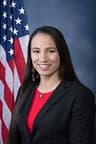 Sharice Davids
Democrat · Kansas
 Henry Johnson
Democrat · Georgia
 Betty McCollum
Democrat · Minnesota
 Eleanor Norton
Democrat · District of Columbia
 Janice Schakowsky
Democrat · Illinois