
A Democratic bill with 3 Democratic cosponsors · See all 3 cosponsors
Last activity — Referred to the House Committee on Education and Workforce.
In committee
Introduced and handed to a committee in the chamber it started in.
The committee holds it, and most bills are never heard from again. A hearing or a committee vote would be news; silence is the usual outcome, and it kills the bill without anyone voting against it.
Its path through Congress
- Introduced
- In Committee
What this bill would do
The bill amends the Higher Education Act of 1965 to create a federal-state partnership that provides grants for tuition-free community colleges. It establishes a Student Success Fund to help eligible states and Tribal Colleges or Universities improve student outcomes through evidence-based reforms. The legislation also provides specific grants and pathways to student success for Historically Black Colleges and Universities, Tribal Colleges and Universities, and Minority-Serving Institutions. Furthermore, the bill sets up automatic spending stabilizers for states experiencing elevated unemployment periods. Finally, it authorizes and appropriates funds for each of these programs starting in fiscal year 2027.
Yes· 3 of 23
- Scored +9
Would households on low incomes be better off under this?
The legislation directly targets low-income students by eliminating community college tuition and fees and providing targeted funding to high-need institutions.
- Scored +9
Would students be better off under this?
Students at community colleges and participating minority-serving institutions benefit from tuition-free policies, expanded academic support, and student success funds.
- Scored +9
Does this make college cost less?
The bill sets tuition and fees to $0 for eligible community college students and provides tuition rebates at participating four-year minority-serving institutions.
The opposite
No question was scored the opposite.
Who it would affect, and how
Potential Positive Impacts for People
- Tuition-Free Community College: Under Section 101 (adding section 499A), the bill provides federal grants to help states and Tribal Colleges and Universities cover the costs needed to make community college tuition and fees $0 for eligible students. This makes higher education more financially accessible for individuals and families.
- Support Services for Students: As outlined in Section 101 (adding section 499C(b)(4)), participating community colleges will provide comprehensive academic, career, and student support services, including mentoring, advising, childcare, transportation, emergency financial assistance, and mental health services. This helps low-income, first-generation, and underrepresented students overcome non-tuition barriers to staying in school.
- Inclusion Regardless of Immigration Status: According to Section 101 (adding section 499D(e)), no individual shall be determined to be ineligible to receive benefits—including $0 tuition and fees—on the basis of citizenship, alienage, or immigration status. This opens up educational opportunities to students regardless of their background.
- Financial Support for Minority-Serving Institutions: Under Section 301 (adding section 499P, 499Q, 499R, and 499S), grants are awarded to Historically Black Colleges and Universities, Tribal Colleges and Universities, and specific Minority-Serving Institutions to significantly reduce or waive tuition for low-income students for their first 60 credits. This directly benefits underserved student populations at these institutions.
Potential Negative Impacts for People
- State Matching Requirements: Under Section 101 (adding section 499B(b)), states are required to provide a matching State share that increases over time, starting at 0 percent for the 2027-2028 award year up to 20 percent for the 2031-2032 award year and beyond. If a state struggles to meet these matching funds, it could potentially strain state budgets or lead to funding cuts elsewhere.
- Institutional Matching Funds for Student Success Grants: Under Section 201 (adding section 499J(b)), entities participating in the Student Success Fund must provide non-Federal matching funds starting at 25 percent and scaling up to 100 percent by the ninth year. This creates a financial burden on participating states and institutions to maintain the matching funds over time.
Groups and Interests Ranking
Every group the model scored this bill for, from -10 to +10. Tap or hover a score for the reason it gave.
- Demographic And Interest Groups
- Would households on low incomes be better off under this? — The legislation directly targets low-income students by eliminating community college tuition and fees and providing targeted funding to high-need institutions. Would students be better off under this? — Students at community colleges and participating minority-serving institutions benefit from tuition-free policies, expanded academic support, and student success funds. Would immigrants be better off under this? — The bill explicitly ensures that individuals are not deemed ineligible for program benefits based on citizenship, alienage, or immigration status. Would Native Americans be better off under this? — The legislation incorporates dedicated grants and support for Tribal Colleges and Universities, Alaska Native-serving, and Native American-serving institutions. Would people in their twenties and thirties be better off under this? — Young adults pursuing higher education at community colleges and minority-serving institutions directly benefit from tuition-free policies and enhanced support services. Would Black Americans be better off under this? — The bill includes specific grant programs and support pathways tailored for Historically Black Colleges and Universities and Predominantly Black Institutions. Would Hispanic Americans be better off under this? — The legislation provides targeted funding and support pathways for Hispanic-Serving Institutions and minority-serving colleges. Would middle-income households be better off under this? — Middle-income families with students attending community colleges or eligible four-year institutions benefit from substantial reductions in tuition costs. Would Asian Americans be better off under this? — The bill provides specific funding pathways for Asian American and Native American Pacific Islander-serving institutions. Would people in middle age be better off under this? — Adult and non-traditional students enrolled in community college programs benefit from tuition elimination and comprehensive support services. Would people with disabilities be better off under this? — The legislation prioritizes funding to improve outcomes and provide support services for students with disabilities. Would people in rural areas be better off under this? — Rural residents attending community colleges or Tribal Colleges and Universities benefit directly from expanded grant funding and affordable access. Would women be better off under this? — The bill supports student parents, a demographic disproportionately comprised of women, through funded childcare and support services. Would children be better off under this? — The bill supports student parents by including childcare among the allowable support services funded through institutional grants. Would veterans be better off under this, taking everything together? — Veterans and military families pursuing post-secondary community college education benefit from zero-tuition provisions and support services.
- Education And Technology
- Does this make college cost less? — The bill sets tuition and fees to $0 for eligible community college students and provides tuition rebates at participating four-year minority-serving institutions. Does this put more money into public schools? — The legislation establishes substantial federal grants to states and Tribal Colleges to cover community college tuition and fees and fund student success initiatives. Does this reduce what student borrowers owe or repay? — By reducing or eliminating tuition costs at community colleges and MSIs, the bill significantly lowers the need for students to take on debt.
- Social Issues And Justice
- Does this narrow racial gaps in how people are treated? — The bill provides dedicated grant funding and pathways to student success specifically for Historically Black Colleges and Universities, Tribal Colleges and Universities, and Minority-Serving Institutions. Does this make it easier for immigrants already here to become citizens? — The bill explicitly prohibits denying benefits or $0 tuition eligibility to students on the basis of citizenship, alienage, or immigration status. Is this likely to lift people out of poverty? — By covering tuition and fees and providing support services for low-income students at community colleges and MSIs, the bill helps remove financial barriers to upward mobility.
- Economy And Finance
- Is this likely to grow the economy? — The bill provides federal investments in higher education and workforce training that can enhance workforce skills and long-term economic productivity.
- Governance And Ideology
- Does this give the federal government more power? — The bill establishes new federal grant programs tied to specific state matching requirements, maintenance of effort rules, and federal educational standards.
- 10/1/2026
- Referred to the House Committee on Education and Workforce.
- 3 Cosponsors added.
- Introduced in House
One bill Congress.gov lists as related to this one — companions in the other chamber, earlier versions, and bills this one absorbed or was folded into.
 Madeleine Dean
Democrat · Pennsylvania
 Teresa Leger Fernandez
Democrat · New Mexico
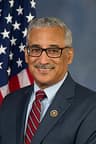 Robert Scott
Democrat · Virginia