
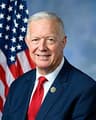
Scott Peters (D-CA)
Safer Choice Program Authorization Act of 2026
A Democratic bill with 2 Republican cosponsors · See all 2 cosponsors
Last activity — Referred to the House Committee on Energy and Commerce.
In committee
Introduced and handed to a committee in the chamber it started in.
The committee holds it, and most bills are never heard from again. A hearing or a committee vote would be news; silence is the usual outcome, and it kills the bill without anyone voting against it.
Its path through Congress
- Introduced
- In Committee
What this bill would do
This bill officially authorizes the Safer Choice Program within the Environmental Protection Agency to help promote safer chemical products. It keeps participation completely voluntary for businesses and lets the agency manage official labels like the Safer Choice label and the Design for the Environment label. The legislation requires the agency to use science-based safety standards that check for human health and environmental hazards. It also allows the use of independent third-party reviewers to evaluate products while protecting confidential business information. Finally, the bill authorizes $12 million in funding for each fiscal year from 2028 through 2034 to keep the program running.
Yes· 3 of 12
- Scored +7
Does this better protect air, water and wildlife?
Section 4 establishes the Safer Choice Program to advance pollution prevention and evaluate environmental hazards like toxicity and persistence.
- Scored +6
Does this give people more protection from unfair business practices?
The bill provides clear and reliable information and product labels to help consumers choose safer chemical products.
- Scored +6
Does this make what the government does easier for the public to see?
Section 8 requires annual reports to Congress and a publicly accessible database of certified products.
The opposite
- Scored -2
Does this reduce what the federal government spends?
Section 9 authorizes $12 million in annual appropriations for fiscal years 2028 through 2034.
Who it would affect, and how
Potential Positive Impacts for People
-
Better Information for Consumers: Section 2 outlines that the program gives consumers clear and reliable details to help them choose safer products. This is a positive outcome because it empowers everyday people to make informed health choices for their households.
-
Healthier Chemical Standards: Under Section 6(a), the Environmental Protection Agency must use a science-based approach that evaluates human health hazards like cancer risks, reproductive toxicity, and neurotoxicity. This protects the public by ensuring that certified products meet rigorous safety criteria.
-
Openness and Public Accountability: Section 8 requires the agency to submit annual reports to Congress and maintain a public database of certified products. This holds our officials accountable and lets citizens easily check which products have earned the safety labels.
Potential Negative Impacts for People
- Cost to Taxpayers: Section 9 authorizes appropriations of $12 million for each fiscal year from 2028 through 2034 to carry out the Act. This creates a direct financial burden on everyday taxpayers who fund the federal government.
Groups and Interests Ranking
Every group the model scored this bill for, from -10 to +10. Tap or hover a score for the reason it gave.
- Demographic And Interest Groups
- Would business owners be better off under this? — The bill provides manufacturers and businesses with a predictable framework and voluntary label system to differentiate products. Would children be better off under this? — Promoting safer consumer and cleaning products helps protect children from hazardous chemical exposures. Would households on low incomes be better off under this? — Clear labeling and safety standards help all households make informed health choices regarding everyday products. Would middle-income households be better off under this? — Clear labeling and safety standards help all households make informed health choices regarding everyday products. Would women be better off under this? — The program evaluates reproductive and developmental toxicity, offering protective benefits for consumers.
- Economy And Finance
- Does this give people more protection from unfair business practices? — The bill provides clear and reliable information and product labels to help consumers choose safer chemical products. Does this make it easier to run a small business? — Section 2 notes the program supports manufacturers including small and medium-sized businesses by providing a predictable framework for safer products. Does this reduce what the federal government spends? — Section 9 authorizes $12 million in annual appropriations for fiscal years 2028 through 2034.
- Environment Energy And Infrastructure
- Does this better protect air, water and wildlife? — Section 4 establishes the Safer Choice Program to advance pollution prevention and evaluate environmental hazards like toxicity and persistence.
- Healthcare
- Does this put more money into medical research? — The legislation supports science-based chemical evaluations and safety standards managed by the Environmental Protection Agency. Does this make health care easier to get in general? — By evaluating human health hazards such as cancer risks and reproductive toxicity, the program promotes safer household products.
- Governance And Ideology
- Does this make what the government does easier for the public to see? — Section 8 requires annual reports to Congress and a publicly accessible database of certified products.
- Education And Technology
- Does this put more money into scientific research? — The bill mandates science-based evaluations of chemical ingredients to assess health and environmental hazards.
- 10/22/2026
- 1 Cosponsor added.
- 9/24/2026
- Referred to the House Committee on Energy and Commerce.
- 1 Cosponsor added.
- Introduced in House
One bill Congress.gov lists as related to this one — companions in the other chamber, earlier versions, and bills this one absorbed or was folded into.
 Mariannette Miller-Meeks
Republican · Iowa
 Randy Weber
Republican · Texas