
A Democratic bill with 2 Republican cosponsors · See all 4 cosponsors
Last activity — Referred to the House Committee on Energy and Commerce.
In committee
Introduced and handed to a committee in the chamber it started in.
The committee holds it, and most bills are never heard from again. A hearing or a committee vote would be news; silence is the usual outcome, and it kills the bill without anyone voting against it.
Its path through Congress
- Introduced
- In Committee
What this bill would do
This bill aims to modernize and strengthen federal efforts to improve ovarian cancer awareness, testing, and care. It updates public health awareness campaigns and creates grant programs to test outreach strategies, with a preference for rural and underserved areas. The legislation amends the Public Health Service Act to improve rural access to healthcare services and expand health outcomes capacity. It requires group health plans and health insurance issuers to provide specific coverage for genetic counseling, genetic and genomic testing, and risk-reducing interventions. Finally, the bill requires the Secretary of Health and Human Services to submit implementation plans and regular reports to Congress.
Yes· 3 of 11
- Scored +9
Would women be better off under this?
The legislation directly targets ovarian and hereditary cancer risks by expanding public awareness, improving health coverage for genetic testing, and increasing access to specialty care for women.
- Scored +8
Does this make health care easier to get in general?
The bill enhances rural health care services outreach grants, expands capacity for health outcomes, and mandates insurance coverage for genetic counseling and early detection of ovarian cancer.
- Scored +7
Would people in rural areas be better off under this?
The bill provides targeted grant preferences and outreach strategies specifically designed to improve ovarian cancer prevention and care in rural and Tribal communities.
The opposite
No question was scored the opposite.
Who it would affect, and how
Potential Positive Impacts for People
-
Section 3 reauthorizes and updates Johanna's Law to enhance public outreach, education, and demonstration projects, which helps spread awareness and supports high-risk populations.
-
Section 4 updates rural health care services outreach grants and expands capacity for health outcomes to explicitly include ovarian cancer, which helps people in rural and Tribal communities get better access to prevention, diagnosis, treatment, and survivorship services.
-
Section 5 requires group health plans and health insurance issuers to provide coverage for genetic counseling, multi-gene panel testing, and tumor genomic profiling for eligible individuals, which ensures people can get necessary testing without being left to pay out of pocket.
-
Section 5 also mandates that health plans cover evidence-based early detection, hereditary cancer risk management, and risk-reducing surgeries for individuals identified at elevated risk, which helps people take preventive action to protect their health.
Potential Negative Impacts for People
- Section 5 requires health insurance plans to expand coverage for genetic testing, counseling, and risk-reducing surgeries, which could potentially lead to higher overall health insurance premiums or administrative costs for enrollees.
Groups and Interests Ranking
Every group the model scored this bill for, from -10 to +10. Tap or hover a score for the reason it gave.
- Demographic And Interest Groups
- Would women be better off under this? — The legislation directly targets ovarian and hereditary cancer risks by expanding public awareness, improving health coverage for genetic testing, and increasing access to specialty care for women. Would people in rural areas be better off under this? — The bill provides targeted grant preferences and outreach strategies specifically designed to improve ovarian cancer prevention and care in rural and Tribal communities. Would households on low incomes be better off under this? — By mandating insurance coverage for genetic testing and prioritizing medically underserved communities, the bill helps low-income individuals access specialized care without prohibitive out-of-pocket costs. Would people over 65 be better off under this? — Older women, who are at higher risk for gynecologic cancers, benefit from improved access to awareness campaigns, screening, and risk-reducing interventions. Would middle-income households be better off under this? — Middle-class families with health insurance will gain guaranteed coverage for genetic counseling, testing, and risk-reducing interventions.
- Healthcare
- Does this make health care easier to get in general? — The bill enhances rural health care services outreach grants, expands capacity for health outcomes, and mandates insurance coverage for genetic counseling and early detection of ovarian cancer. Does this strengthen the Affordable Care Act? — The bill amends the Public Health Service Act and the Affordable Care Act to establish new coverage standards for genetic testing, counseling, and risk-reducing interventions. Does this put more money into medical research? — The legislation reauthorizes and funds Johanna's Law demonstration projects and awareness campaigns to improve ovarian cancer education and screening.
- Environment Energy And Infrastructure
- Does this invest in rural communities? — The bill prioritizes rural and Tribal communities in its grant programs and outreach strategies to improve access to ovarian cancer care.
- Social Issues And Justice
- Does this narrow the gap between how men and women are treated? — The bill focuses specifically on modernizing awareness, testing, and care for ovarian cancer, directly addressing a major women's health issue.
- Governance And Ideology
- Does this make what the government does easier for the public to see? — The bill requires regular reports to Congress evaluating the implementation and outcomes of outreach, grants, and insurance standards.
- 10/29/2026
- 1 Cosponsor added.
- 10/5/2026
- 2 Cosponsors added.
- 9/24/2026
- Referred to the House Committee on Energy and Commerce.
- 1 Cosponsor added.
- Introduced in House
One bill Congress.gov lists as related to this one — companions in the other chamber, earlier versions, and bills this one absorbed or was folded into.
 Don Bacon
Republican · Nebraska
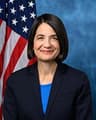 Becca Balint
Democrat · Vermont
 Brian Fitzpatrick
Republican · Pennsylvania
 Eugene Vindman
Democrat · Virginia