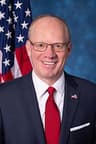
John Rose (R-TN)
Aid and Attendance Assistance for Veterans Act
A Republican bill with 1 Democratic cosponsor · See all 6 cosponsors
Last activity — Referred to the Subcommittee on Disability Assistance and Memorial Affairs.
In committee
Introduced and handed to a committee in the chamber it started in.
The committee holds it, and most bills are never heard from again. A hearing or a committee vote would be news; silence is the usual outcome, and it kills the bill without anyone voting against it.
Its path through Congress
- Introduced
- In Committee
What this bill would do
This bill directs the Secretary of Veterans Affairs to set up a pilot program partnering with qualified pension assistance organizations to help veterans and their beneficiaries with claims development support. The program focuses on non-service-connected pension benefits and survivor pension benefits, including allowances for regular aid and attendance. Participating organizations must meet strict qualification requirements, such as having at least five years of continuous operations and prohibiting any fees charged to claimants. The Secretary is required to establish a performance measurement framework and report to Congress on the program's outcomes and effectiveness. The pilot program authority will terminate on December 31, 2031.
Yes· 3 of 9
- Scored +7
Would veterans be better off under this, taking everything together?
The bill directly benefits veterans and surviving spouses by facilitating claims development and improving access to earned pension and aid and attendance benefits.
- Scored +7
Does this increase the pay, pensions or support veterans receive?
The legislation directs the VA to establish a pilot program partnering with qualified organizations to provide claims development support for veterans applying for pension and aid and attendance benefits.
- Scored +6
Would people over 65 be better off under this?
Many elderly veterans and surviving spouses will benefit from enhanced claims support for non-service-connected pensions and aid and attendance allowances.
The opposite
No question was scored the opposite.
Who it would affect, and how
Potential Positive Impacts for People
-
Support with complex claims: Section 3(b) provides that the pilot program will offer support services such as claimant intake, eligibility screening, document collection, and application preparation, which can help veterans and surviving spouses navigate difficult benefit applications.
-
Protection from financial exploitation: Section 3(j)(5) and Section 3(j)(9) ensure that participating organizations do not sell or receive compensation for financial products or annuities, and prohibit them from having access to a claimant's bank accounts or holding any ownership interest in a claimant's primary residence, protecting individuals from inappropriate financial arrangements.
-
No fees for assistance: Section 3(j)(6) dictates that participating organizations cannot charge any fee to a claimant for preparing, presenting, or prosecuting a claim for benefits, ensuring that help remains free for veterans and beneficiaries.
Potential Negative Impacts for People
- Participation limitations: Section 3(d) allows the Secretary to limit participation in the pilot program based on numerical, geographic, categorical, or other criteria, which could mean that some veterans and beneficiaries who want support may be excluded from the program.
Groups and Interests Ranking
Every group the model scored this bill for, from -10 to +10. Tap or hover a score for the reason it gave.
- Demographic And Interest Groups
- Would veterans be better off under this, taking everything together? — The bill directly benefits veterans and surviving spouses by facilitating claims development and improving access to earned pension and aid and attendance benefits. Would people over 65 be better off under this? — Many elderly veterans and surviving spouses will benefit from enhanced claims support for non-service-connected pensions and aid and attendance allowances. Would households on low incomes be better off under this? — The program helps low-income veterans and surviving spouses navigate complex applications to secure needed pension benefits and long-term care support.
- Healthcare
- Does this help veterans get medical care? — The bill establishes a pilot program providing comprehensive claims development support for veterans and surviving spouses applying for non-service-connected pension benefits and aid and attendance allowances. Does this make health care easier to get in general? — By assisting claimants with gathering necessary medical and long-term care documentation, the bill helps eligible individuals gain timely access to caregiving and long-term care services. Does this put more money into Medicaid, the health coverage for people on low incomes? — The pilot program aims to help eligible veterans and surviving spouses access pension and aid and attendance benefits, which may reduce their reliance on Medicaid-funded long-term care services.
- National Security And Foreign Policy
- Does this increase the pay, pensions or support veterans receive? — The legislation directs the VA to establish a pilot program partnering with qualified organizations to provide claims development support for veterans applying for pension and aid and attendance benefits.
- Governance And Ideology
- Does this make what the government does easier for the public to see? — The bill requires the Secretary of Veterans Affairs to collect detailed performance data and submit preliminary and final reports to Congress.
- Social Issues And Justice
- Is this likely to lift people out of poverty? — Connecting eligible veterans and surviving spouses to earned pension benefits and aid and attendance allowances can improve their financial security and lift individuals out of poverty.
- 10/5/2026
- 1 Cosponsor added.
- 9/29/2026
- Referred to the Subcommittee on Disability Assistance and Memorial Affairs.
- 9/24/2026
- 2 Cosponsors added.
- 9/17/2026
- Referred to the House Committee on Veterans' Affairs.
- 3 Cosponsors added.
- Introduced in House
 Tim Burchett
Republican · Tennessee
 Michael Guest
Republican · Mississippi
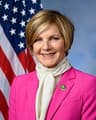 Susie Lee
Democrat · Nevada
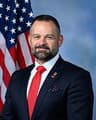 Cory Mills
Republican · Florida
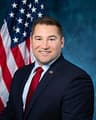 Guy Reschenthaler
Republican · Pennsylvania
 Derrick Van Orden
Republican · Wisconsin