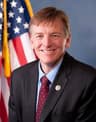
Paul Gosar (R-AZ)
La Paz County Solar Energy and Job Creation Act
A Republican bill with 2 Republican cosponsors · See all 2 cosponsors
Last activity — By Senator Lee from Committee on Energy and Natural Resources filed written report. Report No. 119-109.
Became law
Passed both chambers and was signed by the President, or became law without a signature.
Nothing more in Congress: it is law. When it takes effect depends on the dates written into it — some parts start at once, others a year or more later.
Its path through Congress
- Introduced
- Passed House voice vote
- Passed Senate voice vote
- To President
- Became Law
No one's position on it was recorded: the House by voice vote (members called out yes or no together), and the Senate by voice vote (members called out yes or no together).
What this bill would do
This Act, known as the "La Paz County Solar Energy and Job Creation Act," directs the Secretary of the Interior to transfer certain Federal land to La Paz County, Arizona. The land consists of approximately 3,400 acres managed by the Bureau of Land Management. The transfer is to occur as soon as practicable after the County requests it. The land will be conveyed at its fair market value based on specific appraisal standards. Additionally, the land is withdrawn from mining and mineral leasing laws.
Yes· 3 of 14
- Scored +5
Does this better protect air, water and wildlife?
The act excludes land with significant environmental or wildlife resources from the transfer.
- Scored +5
Does this put more money into wind, solar and other renewable power?
The act is titled to include job creation and solar energy development.
- Scored +5
Does this reduce how much oil, gas and coal is produced?
The land is withdrawn from mining and mineral leasing laws.
The opposite
- Scored -2
Does this give the federal government more power?
The act reduces federal oversight by transferring land to a local entity.
Who it would affect, and how
Potential Positive Impacts for People
-
Land Ownership for the County: The Secretary shall convey the Federal land to the County upon request, which may assist with local control of the land (Section 3(a)).
-
Protection of Tribal Artifacts: The County and future owners are required to make good faith efforts to avoid disturbing Tribal artifacts and must minimize impacts if they are disturbed (Section 3(d)).
-
Preservation of Cultural Resources: The Secretary is required to exclude any Federal land from the conveyance that contains significant cultural, environmental, wildlife, or recreational resources (Section 3(b)(2)).
-
Tribal Coordination: The Act requires coordination with the Colorado River Indian Tribes Tribal Historic Preservation Office to identify significant artifacts (Section 3(d)(3)).
-
Artifact Reburial: Tribal representatives are permitted to rebury unearthed artifacts at or near where they were discovered (Section 3(d)(4)).
Potential Negative Impacts for People
-
Financial Burden on the County: The County is required to pay the appraised fair market value of the land and must also pay all costs related to the conveyance, such as surveys, appraisals, and administrative costs (Section 3(c) and Section 3(g)).
-
Restrictions on Resource Use: The land is withdrawn from the operation of mining and mineral leasing laws (Section 3(f)).
-
Uncertainty in Land Boundaries: The Secretary and the County have the authority to make minor boundary adjustments or correct errors in the map or acreage estimates (Section 3(e)(2)).
Groups and Interests Ranking
Every group the model scored this bill for, from -10 to +10. Tap or hover a score for the reason it gave.
- Environment Energy And Infrastructure
- Does this better protect air, water and wildlife? — The act excludes land with significant environmental or wildlife resources from the transfer. Does this put more money into wind, solar and other renewable power? — The act is titled to include job creation and solar energy development. Does this reduce how much oil, gas and coal is produced? — The land is withdrawn from mining and mineral leasing laws. Does this cut the pollution that drives climate change? — The focus on solar energy may contribute to renewable energy goals. Does this invest in rural communities? — Transferring land to the county may aid local development in a rural area. Does this better protect public land such as parks and forests? — The act provides a mechanism for local control over specific BLM land.
- Demographic And Interest Groups
- Would Native Americans be better off under this? — The act includes specific protections and coordination requirements for Tribal cultural artifacts. Would business owners be better off under this? — The potential for solar energy development could benefit local businesses. Would people in rural areas be better off under this? — The act may bring economic development and job opportunities to the rural county.
- Economy And Finance
- Is this likely to create jobs? — The act's title suggests a focus on solar energy and job creation through land transfer. Is this likely to grow the economy? — The transfer of land to the county may facilitate local economic development through solar energy.
- Governance And Ideology
- Does this leave more decisions to the states? — The act transfers federal control to a local county entity. Does this make what the government does easier for the public to see? — The act requires the map to be available for public inspection. Does this give the federal government more power? — The act reduces federal oversight by transferring land to a local entity.
- Social Issues And Justice
- Does this narrow racial gaps in how people are treated? — The act mandates protections for Tribal artifacts and coordination with Tribal offices.
- Public Law (12/30/2025)
The text as it became law
- Enrolled Bill
The final version, on its way to the President
- 2/11/2026
- By Senator Lee from Committee on Energy and Natural Resources filed written report. Report No. 119-109.
- 12/29/2025
- Signed by President.
- Became Public Law No: 119-68.
- 12/18/2025
- Presented to President.
- 12/17/2025
- Message on Senate action sent to the House.
- 12/16/2025
- Senate Committee on Energy and Natural Resources discharged by Unanimous Consent.
- Passed/agreed to in Senate: Passed Senate without amendment by Voice Vote.
- Passed Senate without amendment by Voice Vote. (consideration: CR S8766-8768)
- 9/11/2025
- Committee on Energy and Natural Resources. Ordered to be reported without amendment favorably.
- 7/22/2025
- Received in the Senate and Read twice and referred to the Committee on Energy and Natural Resources.
- 7/21/2025
- Motion to reconsider laid on the table Agreed to without objection.
- Passed/agreed to in House: On motion to suspend the rules and pass the bill Agreed to by voice vote. (text: CR H3498-3499)
- On motion to suspend the rules and pass the bill Agreed to by voice vote. (text: CR H3498-3499)
- DEBATE - The House proceeded with forty minutes of debate on H.R. 1043.
- Considered under suspension of the rules. (consideration: CR H3498)
- Mr. Gosar moved to suspend the rules and pass the bill.
- 7/2/2025
- Reported by the Committee on Natural Resources. H. Rept. 119-183.
- Placed on the Union Calendar, Calendar No. 148.
- 4/9/2025
- Committee Consideration and Mark-up Session Held
- Ordered to be Reported by Unanimous Consent.
- 2/7/2025
- 1 Cosponsor added.
- 2/6/2025
- Referred to the House Committee on Natural Resources.
- 1 Cosponsor added.
- Introduced in House
5 bills Congress.gov lists as related to this one — companions in the other chamber, earlier versions, and bills this one absorbed or was folded into.
 Andy Biggs
Republican · Arizona
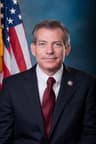 David Schweikert
Republican · Arizona