
A Republican bill with 8 Democratic cosponsors · See all 15 cosponsors
Last activity — Referred to the Committee on Energy and Commerce, and in addition to the Committee on Ways and Means, for a period to be subsequently determined by the Speaker, in each case for consideration of such provisions as fall within the jurisdiction of the committee concerned.
In committee
Introduced and handed to a committee in the chamber it started in.
The committee holds it, and most bills are never heard from again. A hearing or a committee vote would be news; silence is the usual outcome, and it kills the bill without anyone voting against it.
Its path through Congress
- Introduced
- In Committee
What this bill would do
This bill makes changes to how Federally qualified health centers and rural health clinics are paid under the Medicare program. It requires the Secretary to adjust payment rates for health center services in 2028 to match reasonable costs. The legislation sets up a working group to study payment rates, services, and new payment innovations. It also establishes new payment rules and allows costs for telehealth services starting on January 1, 2027. Finally, the bill directs the government to issue guidance on calculating payments for Medicare Advantage enrollees and requires a report on health center access in Medicare Advantage networks.
Yes· 3 of 8
- Scored +6
Does this put more money into Medicare, the health coverage for people over 65?
The bill adjusts Medicare payment rates for Federally qualified health centers to better match reasonable costs.
- Scored +5
Would people over 65 be better off under this?
The legislation explicitly aims to improve access and payment systems for health centers serving seniors and elders.
- Scored +5
Would households on low incomes be better off under this?
The bill supports Federally qualified health centers which provide essential care to low-income individuals.
The opposite
No question was scored the opposite.
Who it would affect, and how
Potential Positive Impacts for People
-
Section 2: This provision requires payment rates for Federally qualified health center services furnished in 2028 to be adjusted so that the total estimated amount equals 100 percent of the estimated reasonable costs. This could benefit health centers by ensuring they receive adequate funding for the care they provide to people.
-
Section 3: This section ensures that telehealth services furnished by Federally qualified health centers or rural health clinics on or after January 1, 2027, will be paid under the proper prospective payment system or all-inclusive rates. This is positive because it helps people in rural and underserved areas keep getting paid telehealth care.
-
Section 4: This part requires the Secretary to issue clear guidance and a standardized process for timely and accurate payments to health centers regarding Medicare Advantage enrollees, while also creating a review mechanism for payment determinations. This helps hold officials accountable for paying health centers correctly and ensures centers get their money without unnecessary hurdles.
Potential Negative Impacts for People
- Section 2: Under this section, Federally qualified health centers are required to submit cost reports, uniform data system reports, and other program reports within 90 days of enactment. This extra paperwork and reporting burden could take time and resources away from patient care for these community health centers.
Groups and Interests Ranking
Every group the model scored this bill for, from -10 to +10. Tap or hover a score for the reason it gave.
- Demographic And Interest Groups
- Would households on low incomes be better off under this? — The bill supports Federally qualified health centers which provide essential care to low-income individuals. Would retired people be better off under this? — The bill enhances healthcare access and payment structures for seniors and older adults utilizing health centers. Would people in rural areas be better off under this? — The bill improves payment rules and telehealth access for rural health clinics serving rural areas. Would people over 65 be better off under this? — The legislation explicitly aims to improve access and payment systems for health centers serving seniors and elders.
- Healthcare
- Does this put more money into Medicare, the health coverage for people over 65? — The bill adjusts Medicare payment rates for Federally qualified health centers to better match reasonable costs. Does this make health care easier to get in general? — The legislation improves access to healthcare services, including telehealth, provided by Federally qualified health centers and rural health clinics.
- Environment Energy And Infrastructure
- Does this invest in rural communities? — The bill supports rural health clinics and improves health center access for rural populations.
- Governance And Ideology
- Does this make what the government does easier for the public to see? — The bill requires clear guidance, reporting, and a Comptroller General report on Medicare Advantage networks.
- 11/9/2026
- 1 Cosponsor added.
- 10/5/2026
- 4 Cosponsors added.
- 9/15/2026
- Referred to the Committee on Energy and Commerce, and in addition to the Committee on Ways and Means, for a period to be subsequently determined by the Speaker, in each case for consideration of such provisions as fall within the jurisdiction of the committee concerned.
- 10 Cosponsors added.
- Introduced in House
 Gus Bilirakis
Republican · Florida
 Nanette Barragán
Democrat · California
 Salud Carbajal
Democrat · California
 Troy Carter
Democrat · Louisiana
 Debbie Dingell
Democrat · Michigan
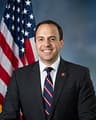 Lance Gooden
Republican · Texas
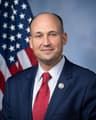 Nicholas Langworthy
Republican · New York
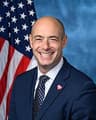 Greg Landsman
Democrat · Ohio
 Ryan Mackenzie
Republican · Pennsylvania
 August Pfluger
Republican · Texas
 Darren Soto
Democrat · Florida
 Glenn Thompson
Republican · Pennsylvania
 Lori Trahan
Democrat · Massachusetts
 Jill Tokuda
Democrat · Hawaii
 David Taylor
Republican · Ohio