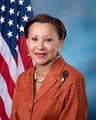
Nydia Velázquez (D-NY)
504 Modernization and Small Manufacturer Enhancement Act of 2026
A Democratic bill with 1 Republican cosponsor · See all 3 cosponsors
Last activity — Received in the Senate and Read twice and referred to the Committee on Small Business and Entrepreneurship.
In the other chamber's committee
Passed one chamber and has been handed to a committee in the other.
The committee decides whether it goes any further, and most bills that reach a committee never leave it. A committee that simply does nothing kills a bill without anyone ever voting against it, so no news from here is usually the news.
Its path through Congress
- Introduced
- Passed House voice vote
- In Senate committee
The House by voice vote (members called out yes or no together): no member's position on it was recorded.
What this bill would do
H.R. 10375 is known as the 504 Modernization and Small Manufacturer Enhancement Act of 2026. This legislation makes several changes to the Small Business Investment Act of 1958 regarding small business loan programs and development companies. It updates policy goals for the development company program, such as adding workforce training and disaster area revitalization. The bill also streamlines loan closing procedures, changes leasing rules for new and existing buildings, and requires the Small Business Administration to implement a marketing and outreach plan. Finally, the Act creates exemptions for certain loans and applies these new rules to loans made on or after October 1, 2027.
Yes· 3 of 7
- Scored +8
Would business owners be better off under this?
The bill provides significant benefits including streamlined loan closings, increased leasing flexibility, and expanded support for very small businesses.
- Scored +7
Does this make it easier to run a small business?
The bill enhances capital access by streamlining loan closing procedures and increasing leasing flexibility for new and existing facilities.
- Scored +5
Is this likely to create jobs?
The bill promotes workforce development through work-based training requirements for small businesses.
The opposite
No question was scored the opposite.
How the text last changed
Engrossed in House (11/11/2026), compared with Reported in House. Each change is on the Text tab.
The newer version of the bill removes a requirement for the Small Business Administration Administrator to begin implementing a marketing and outreach plan within 1 year of enactment, while keeping the requirement to develop and implement such a plan. It changes the wording of a required report to Congress from analyzing the "impact" to the "effect" of leasing rule amendments on small business access to capital. Finally, it adds a new section stating that the Act and its amendments apply to loans made or guaranteed under title V of the Small Business Investment Act of 1958 on or after October 1, 2027.
Who it would affect, and how
Potential Positive Impacts for People
-
Workforce Development Support: Section 2 adds workforce training as a policy goal for the development company program. This could benefit individuals by encouraging small businesses to provide in-house training programs lasting at least 12 weeks or partner with entities that supply trained job applicants.
-
Disaster Area Recovery: Section 2 also adds aid for revitalizing disaster-declared areas as a program goal. This provision helps communities and individuals recover by prioritizing projects in areas affected by disasters during a five-year window.
-
Support for Very Small Businesses: Section 2 adds the expansion of small businesses with 10 or fewer employees as a specific policy goal. This provision helps micro-businesses gain better access to support and capital.
-
Simplified Loan Closings: Section 3 allows accredited lender certified companies to take specific actions to facilitate loan closings, such as making typographical corrections, reallocating project costs by up to 10 percent, and reducing debt. This makes the loan closing process faster and less burdensome for borrowers.
-
Increased Outreach: Section 4 requires the Small Business Administration to develop and implement a marketing and outreach plan for available loans. This helps ensure that more people and small business owners are aware of the financial assistance options available to them.
Potential Negative Impacts for People
-
Increased Leasing in Existing Buildings: Section 5 allows small businesses acquiring existing buildings to lease up to 66 percent of the project to commercial or residential tenants under specific exceptions. Individuals might consider this negative if it reduces the actual space used directly by the operating small business or alters neighborhood commercial dynamics.
-
Strict Documentation Requirements for Training: Section 2 requires small businesses to meet exact criteria, such as a documented in-house training program lasting no shorter than 12 weeks, to qualify under the workforce development provision. Smaller business owners might find these rigid time requirements difficult to implement.
Groups and Interests Ranking
Every group the model scored this bill for, from -10 to +10. Tap or hover a score for the reason it gave.
- Demographic And Interest Groups
- Would business owners be better off under this? — The bill provides significant benefits including streamlined loan closings, increased leasing flexibility, and expanded support for very small businesses. Would people in rural areas be better off under this? — Disaster revitalization goals may specifically benefit rural communities facing declared disasters. Would households on low incomes be better off under this? — Increased small business support and potential residential leasing may have minor positive impacts on local economic stability.
- Economy And Finance
- Does this make it easier to run a small business? — The bill enhances capital access by streamlining loan closing procedures and increasing leasing flexibility for new and existing facilities. Is this likely to create jobs? — The bill promotes workforce development through work-based training requirements for small businesses.
- Environment Energy And Infrastructure
- Does this improve help for people hit by a disaster? — The bill adds a goal to aid the revitalization of areas affected by declared disasters.
- Social Issues And Justice
- Does this make housing cost less? — The bill allows small businesses to lease portions of their projects to residential tenants, potentially increasing housing availability.
The version one chamber actually passed
What changed from Reported in House
The newer version of the bill removes a requirement for the Small Business Administration Administrator to begin implementing a marketing and outreach plan within 1 year of enactment, while keeping the requirement to develop and implement such a plan. It changes the wording of a required report to Congress from analyzing the "impact" to the "effect" of leasing rule amendments on small business access to capital. Finally, it adds a new section stating that the Act and its amendments apply to loans made or guaranteed under title V of the Small Business Investment Act of 1958 on or after October 1, 2027.
Each change
- Section 4: Removed the subsection requiring the Administrator of the Small Business Administration to begin implementing the marketing and outreach plan not later than 1 year after the date of the enactment of this Act, and restructured the remaining text of the section.
- Section 5: Changed the required congressional report in subsection (b) from analyzing the [-impact-] to analyzing the {+effect+} of the amendments on access to capital for small business concerns.
- Section 7: Added a new section stating that the Act and its amendments shall apply with respect to a loan made or guaranteed under title V of the Small Business Investment Act of 1958 on or after October 1, 2027.
Written by an AI model from a comparison of this version’s text with the one before it, not by a person. .
A committee approved it and sent it to the floor
What changed from Introduced in House: No change to the wording. Only the printed details that record the bill’s progress, such as the heading and dates, are different.
- 11/12/2026
- Received in the Senate and Read twice and referred to the Committee on Small Business and Entrepreneurship.
- 11/11/2026
- Motion to reconsider laid on the table Agreed to without objection.
- Passed/agreed to in House: On motion to suspend the rules and pass the bill, as amended Agreed to by voice vote.
- On motion to suspend the rules and pass the bill, as amended Agreed to by voice vote.
- DEBATE - The House proceeded with forty minutes of debate on H.R. 10375.
- Considered under suspension of the rules.
- Mr. Williams (TX) moved to suspend the rules and pass the bill, as amended.
- 10/9/2026
- Reported by the Committee on Small Business. H. Rept. 119-848.
- Placed on the Union Calendar, Calendar No. 745.
- 9/16/2026
- Committee Consideration and Mark-up Session Held
- Ordered to be Reported by the Yeas and Nays: 23 - 0.
- 2 Cosponsors added.
- 9/14/2026
- Referred to the House Committee on Small Business.
- 1 Cosponsor added.
- Introduced in House
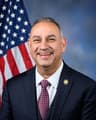 Gilbert Cisneros
Democrat · California
 Derek Tran
Democrat · California
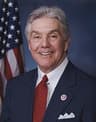 Roger Williams
Republican · Texas