
Kimberlyn King-Hinds (R-MP)
Marianas Tourism Advancement Act of 2026
A Republican bill with 1 Republican cosponsor · See the cosponsor
Last activity — Referred to the House Committee on the Judiciary.
In committee
Introduced and handed to a committee in the chamber it started in.
The committee holds it, and most bills are never heard from again. A hearing or a committee vote would be news; silence is the usual outcome, and it kills the bill without anyone voting against it.
Its path through Congress
- Introduced
- In Committee
What this bill would do
This bill is known as the Marianas Tourism Advancement Act of 2026. It changes how the Guam and Northern Mariana Islands Visa Waiver Program works. The text sets new rules for when the Secretary of Homeland Security can suspend country admissions under the program. It also adds specific countries to the list of those eligible for the waiver program.
Yes· 3 of 13
- Scored +6
Would business owners be better off under this?
Business owners in the tourism sector in Guam and CNMI will benefit from increased visitor numbers.
- Scored +5
Would Asian Americans be better off under this?
The bill explicitly expands travel privileges for nationals of several major Asian countries.
- Scored +5
Is this likely to grow the economy?
The bill aims to advance tourism and protects local economies by requiring impact assessments before suspending visa waivers.
The opposite
No question was scored the opposite.
Who it would affect, and how
Potential Positive Impacts for People
-
Section 2(a)(2) adds the Republic of India, Republic of the Philippines, the Socialist Republic of Vietnam, the Kingdom of Thailand, the Republic of Indonesia, and Mongolia as eligible countries under the visa waiver program. This could be positive because it expands travel and tourism opportunities for nationals from these countries, unless the Secretary determines they meet suspension criteria.
-
Section 2(a)(1), amending paragraph (5)(B), requires the Secretary of Homeland Security to consult with local leaders like the Governor of Guam and the Governor of the Commonwealth of the Northern Mariana Islands, and prepare an economic assessment before suspending a country. This is beneficial because it ensures local economic impacts on visitor arrivals, employment, and business activity are considered before decisions are made.
-
Section 2(a)(1), amending paragraph (5)(E), requires the Secretary to review suspensions after 180 days and annually after that, and to end the suspension if the original conditions no longer exist. This is a positive check on official actions because it prevents indefinite suspensions when problems are resolved.
Potential Negative Impacts for People
-
Section 2(a)(1), amending paragraph (5)(A), allows the Secretary of Homeland Security to suspend the admission of nationals from a country based on specific findings, such as unlawful presence, unlawful entry into other parts of the United States, or threats to safety and security. This could negatively impact individuals who wish to travel or visit family if their country's admission gets cut off.
-
Section 2(a)(1), amending paragraph (5)(D), gives the Secretary the power to enact an emergency suspension immediately if there is an imminent and substantial threat to national security or public safety. While meant for security, this burdens travelers who may face sudden cancellations of their travel plans without the usual advance notice and consultation periods.
Groups and Interests Ranking
Every group the model scored this bill for, from -10 to +10. Tap or hover a score for the reason it gave.
- Demographic And Interest Groups
- Would business owners be better off under this? — Business owners in the tourism sector in Guam and CNMI will benefit from increased visitor numbers. Would Asian Americans be better off under this? — The bill explicitly expands travel privileges for nationals of several major Asian countries. Would immigrants be better off under this? — Makes it easier for nationals from six specific countries to visit Guam and CNMI.
- Economy And Finance
- Is this likely to grow the economy? — The bill aims to advance tourism and protects local economies by requiring impact assessments before suspending visa waivers. Does this make it easier to run a small business? — Increased visitor arrivals from new eligible countries will likely benefit local small businesses in the tourism industry. Is this likely to create jobs? — Increasing tourism from specified Asian countries is expected to boost employment in the tourism and service sectors of Guam and the CNMI.
- National Security And Foreign Policy
- Does this favour talking over confrontation abroad? — The mandate to include specific Asian nations in the program promotes better diplomatic relations. Does this strengthen ties with allied countries? — Expanding visa-free travel to India, Philippines, Vietnam, Thailand, Indonesia, and Mongolia strengthens diplomatic ties. Does this make trade with other countries easier? — Increased tourism flow often leads to increased international trade and economic exchange.
- Governance And Ideology
- Does this make what the government does easier for the public to see? — Mandatory reporting and notice to Congress regarding the reasons for suspending visa waivers increases transparency. Does this protect the right to fair treatment by the courts? — Establishes a more rigorous, fact-based process for the suspension of admissions rather than arbitrary action. Does this leave more decisions to the states? — The bill requires the Secretary of DHS to consult with the Governors of Guam and the CNMI before suspending admissions.
- Social Issues And Justice
- Does this tighten control of the border? — The bill maintains strict criteria for suspension based on unlawful presence and national security threats.
- 9/10/2026
- Referred to the House Committee on the Judiciary.
- 1 Cosponsor added.
- Introduced in House
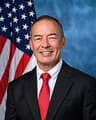 James Moylan
Republican · Guam