
A Democratic bill with 2 Republican cosponsors · See all 7 cosponsors
Last activity — Referred to the House Committee on Energy and Commerce.
In committee
Introduced and handed to a committee in the chamber it started in.
The committee holds it, and most bills are never heard from again. A hearing or a committee vote would be news; silence is the usual outcome, and it kills the bill without anyone voting against it.
Its path through Congress
- Introduced
- In Committee
What this bill would do
This legislation is known as the 9-8-8 Crisis Response Act. The bill aims to promote access to mental health crisis response services by amending the Public Health Service Act and the Social Security Act. It increases authorized funding for the mental health crisis response partnership pilot program for specific fiscal years. The text also revises the Medicaid program to include support for regional and local lifeline call center operations and services furnished by crisis receiving and stabilization facilities. Furthermore, the bill outlines specific operational definitions and requirements for these crisis receiving and stabilization facilities. Finally, it appropriates five million dollars to the Secretary for specific purposes.
Yes· 3 of 8
- Scored +9
Does this make mental health care easier to get?
Significant funding increases and Medicaid expansions directly enhance access to mental health crisis services.
- Scored +8
Does this put more money into Medicaid, the health coverage for people on low incomes?
The bill expands Medicaid coverage for crisis lifeline operations and stabilization facilities.
- Scored +7
Would households on low incomes be better off under this?
Expanded Medicaid coverage and inability to reject service based on ability to pay benefits low-income families.
The opposite
No question was scored the opposite.
Who it would affect, and how
Potential Positive Impacts for People
-
Section 2 increases funding for the mental health crisis response partnership pilot program to $100,000,000 for each of fiscal years 2027 through 2029, which could provide significantly more resources for mental health support compared to previous funding levels.
-
Section 3 expands the Medicaid program under Section 1947 of the Social Security Act so that states can also receive federal medical assistance percentages for regional and local lifeline call center operations and services furnished by crisis receiving and stabilization facilities.
-
Section 3 establishes that crisis receiving and stabilization facilities must provide services 24 hours per day, 7 days per week using a sliding scale of payment, and ensures they neither reject service nor limit services on the basis of a patient's ability to pay, place of residence, prior forensic engagement, acuity, disability, age, or related factors.
-
Section 3 creates a no-wrong-door admission capacity at these facilities that is available to law enforcement officers, emergency medical personnel, and family members.
Potential Negative Impacts for People
- Based on the provided text, there are no specific negative impacts or burdens explicitly identified for individuals or groups of people in the United States.
Groups and Interests Ranking
Every group the model scored this bill for, from -10 to +10. Tap or hover a score for the reason it gave.
- Healthcare
- Does this make mental health care easier to get? — Significant funding increases and Medicaid expansions directly enhance access to mental health crisis services. Does this put more money into Medicaid, the health coverage for people on low incomes? — The bill expands Medicaid coverage for crisis lifeline operations and stabilization facilities. Does this make health care easier to get in general? — Expanded services through Medicaid improve overall access to crisis stabilization. Does this do more about addiction and overdose deaths? — Crisis stabilization includes withdrawal management which supports response to substance use crises.
- Demographic And Interest Groups
- Would households on low incomes be better off under this? — Expanded Medicaid coverage and inability to reject service based on ability to pay benefits low-income families. Would people with disabilities be better off under this? — The bill explicitly protects against service denial based on intellectual or developmental disabilities.
- Social Issues And Justice
- Does this expand the rights of people with disabilities? — The bill mandates that facilities cannot reject service based on intellectual or developmental disabilities. Does this change how police departments operate? — Creating no-wrong-door options for law enforcement provides alternatives to traditional policing during mental health crises.
- 9/3/2026
- Referred to the House Committee on Energy and Commerce.
- 7 Cosponsors added.
- Introduced in House
One bill Congress.gov lists as related to this one — companions in the other chamber, earlier versions, and bills this one absorbed or was folded into.
 Nanette Barragán
Democrat · California
 Brian Fitzpatrick
Republican · Pennsylvania
 Doris Matsui
Democrat · California
 Jennifer McClellan
Democrat · Virginia
 Adam Smith
Democrat · Washington
 Lori Trahan
Democrat · Massachusetts
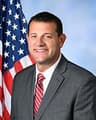 David Valadao
Republican · California