
A Republican bill with 4 Republican cosponsors · See all 4 cosponsors
Last activity — Referred to the Committee on Oversight and Government Reform, and in addition to the Committee on Armed Services, for a period to be subsequently determined by the Speaker, in each case for consideration of such provisions as fall within the jurisdiction of the committee concerned.
In committee
Introduced and handed to a committee in the chamber it started in.
The committee holds it, and most bills are never heard from again. A hearing or a committee vote would be news; silence is the usual outcome, and it kills the bill without anyone voting against it.
Its path through Congress
- Introduced
- In Committee
What this bill would do
This bill, titled the "No Preference Act," seeks to amend titles 41 and 10 of the United States Code. The primary goal is to prohibit federal agencies from requiring or giving preference to contractors based on the use of union labor. Specifically, it would prevent executive agency heads from favoring offerors who use workers subject to a collective bargaining agreement. Additionally, it would prohibit the Secretary of Defense from making similar requirements or preferences for defense contracts.
Yes
- Scored +5
Would business owners be better off under this?
The bill allows business owners without union labor requirements to compete more easily for federal contracts.
- Scored +3
Does this make it easier to run a small business?
The bill removes potential barriers for non-union contractors seeking federal contracts.
The opposite
- Scored -7
Would union members be better off under this?
The bill directly targets the ability of unions to maintain labor preferences in federal and defense contracting.
- Scored -6
Does this strengthen the rights of workers to organise?
The bill prohibits federal agencies and the Secretary of Defense from giving preference to contractors that use workers subject to collective bargaining agreements.
- Scored -3
Would households on low incomes be better off under this?
The reduction in union labor preferences may impact the bargaining power and wages of unionized workers.
Who it would affect, and how
Potential Positive Impacts for People
-
Removal of union labor preferences for executive agencies: The bill would prevent heads of executive agencies from giving preference to companies based on whether they use workers subject to a collective bargaining agreement (Sec. 2).
-
Removal of union labor preferences for defense contracts: The Secretary of Defense would be prohibited from requiring or favoring an offeror based on whether they use workers subject to a collective bargaining agreement (Sec. 3).
Potential Negative Impacts for People
- There are no specific negative impacts or burdens mentioned within the provided text.
Groups and Interests Ranking
Every group the model scored this bill for, from -10 to +10. Tap or hover a score for the reason it gave.
- Demographic And Interest Groups
- Would business owners be better off under this? — The bill allows business owners without union labor requirements to compete more easily for federal contracts. Would union members be better off under this? — The bill directly targets the ability of unions to maintain labor preferences in federal and defense contracting. Would households on low incomes be better off under this? — The reduction in union labor preferences may impact the bargaining power and wages of unionized workers.
- Economy And Finance
- Does this make it easier to run a small business? — The bill removes potential barriers for non-union contractors seeking federal contracts. Does this strengthen the rights of workers to organise? — The bill prohibits federal agencies and the Secretary of Defense from giving preference to contractors that use workers subject to collective bargaining agreements.
- 9/15/2026
- 1 Cosponsor added.
- 9/4/2026
- 2 Cosponsors added.
- 9/3/2026
- Referred to the Committee on Oversight and Government Reform, and in addition to the Committee on Armed Services, for a period to be subsequently determined by the Speaker, in each case for consideration of such provisions as fall within the jurisdiction of the committee concerned.
- 1 Cosponsor added.
- Introduced in House
 Jack Bergman
Republican · Michigan
 Ronny Jackson
Republican · Texas
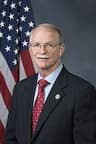 John Rutherford
Republican · Florida
 Steve Womack
Republican · Arkansas