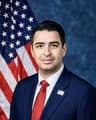
Gabe Evans (R-CO)
Open-Source AI Leadership Act
A Republican bill with no cosponsors
Last activity — Ordered to be Reported by the Yeas and Nays: 26 - 21.
Introduced, nothing more yet
Formally proposed, and not yet handed to a committee.
Nearly every bill is sent to a committee within days. Introduction alone is not a sign of support, of momentum, or of any likelihood of passing — any member may introduce any bill.
Its path through Congress
- Introduced
What this bill would do
The Open-Source AI Leadership Act directs the Secretary of Commerce to support the use of American open artificial intelligence models. To achieve this, the Secretary can designate points of contact, remove barriers, and enter into agreements with private entities, agencies, or foreign partners. The bill also requires the Secretary to identify and publicly report on risks associated with foreign adversary models. These risks include threats to personal information, supply chain security, and national security. A report comparing foreign models to qualified open models must be published annually. This reporting requirement is set to end 10 years after the Act's enactment.
Yes· 3 of 18
- Scored +8
Would business owners be better off under this?
Provides significant support for AI startups and businesses adopting American open models.
- Scored +7
Does this make it easier to run a small business?
Specifically directs the Secretary of Commerce to enter into agreements with startups to support AI adoption.
- Scored +6
Does this better protect the country from computer attacks?
Requires identifying and reporting security risks and supply chain vulnerabilities posed by foreign adversary AI models.
The opposite
No question was scored the opposite.
Who it would affect, and how
Potential Positive Impacts for People
-
Support for American AI Development: The Secretary is tasked with supporting the adoption and use of qualified open models through actions like developing policy, identifying barriers, and entering into agreements with private sector entities and startups (Section 2).
-
Increased Transparency Regarding Foreign Risks: The Secretary must identify and make known risks related to foreign adversary models, such as threats to the confidentiality and integrity of personal and proprietary information (Section 3(a)(2)).
-
Protection of National and Economic Security: The bill directs the assessment of risks involving the development of chemical, biological, radiological, or nuclear capabilities, as well as risks to the national security and economic security of the United States (Section 3(a)(6)).
-
Protection of Information Integrity: The Secretary is required to assess risks related to the output of foreign adversary models regarding historical accuracy, scientific inquiry, and freedom of expression (Section 3(a)(4)).
Potential Negative Impacts for People
- No Provisions Found: The provided text does not explicitly list specific provisions that would result in negative consequences or burdens for individuals or groups of people.
Groups and Interests Ranking
Every group the model scored this bill for, from -10 to +10. Tap or hover a score for the reason it gave.
- Governance And Ideology
- Does this make what the government does easier for the public to see? — Requires the publication of an annual report on foreign adversary AI model risks on a public website. Does this make it easier to do business across state lines? — Facilitates the adoption of open AI models in interstate commerce. Does this protect people from being watched or searched? — Focuses on identifying risks to the confidentiality of personal information from adversary models. Does this leave more decisions to the states? — Encourages the Secretary to enter into agreements with States to support AI adoption. Does this protect the individual right to speak freely? — Protects the availability of open AI models and reviews foreign model impacts on expression. Does this give the federal government more power? — Gives the Secretary of Commerce authority to coordinate and develop policy for AI adoption.
- Economy And Finance
- Does this make it easier to run a small business? — Specifically directs the Secretary of Commerce to enter into agreements with startups to support AI adoption. Is this likely to grow the economy? — Supports American innovation and competitiveness in the global AI market. Is this likely to create jobs? — Promotes the adoption of American AI models and supports startups, which likely stimulates job growth in the tech sector. Does this give people more protection from unfair business practices? — Provides public reporting on risks associated with foreign adversary AI models.
- Demographic And Interest Groups
- Would business owners be better off under this? — Provides significant support for AI startups and businesses adopting American open models. Would people in their twenties and thirties be better off under this? — Supports tech startups and innovation, which predominantly impacts young professionals. Would students be better off under this? — Promotes open-source AI models which are typically more accessible for educational and research purposes.
- National Security And Foreign Policy
- Does this better protect the country from computer attacks? — Requires identifying and reporting security risks and supply chain vulnerabilities posed by foreign adversary AI models. Does this make trade with other countries easier? — Supports the use of American AI models in foreign commerce. Does this strengthen ties with allied countries? — Allows for agreements with qualified foreign partners to support open AI models.
- Education And Technology
- Does this give people more control over their personal data? — Mandates assessments of risks to personal and proprietary information confidentiality from foreign models.
- Social Issues And Justice
- Does this protect what people are allowed to say in public life? — Protects the availability of open AI models and assesses foreign models' impact on freedom of expression.
- 9/16/2026
- Committee Consideration and Mark-up Session Held
- Ordered to be Reported by the Yeas and Nays: 26 - 21.
- 9/1/2026
- Subcommittee Consideration and Mark-up Session Held
- Forwarded by Subcommittee to Full Committee by Voice Vote.
- 8/27/2026
- Referred to the House Committee on Energy and Commerce.
- Referred to the Subcommittee on Commerce, Manufacturing, and Trade.
- Introduced in House