
A Democratic bill with 5 Democratic cosponsors · See all 5 cosponsors
Last activity — Referred to the Committee on Energy and Commerce, and in addition to the Committee on Education and Workforce, for a period to be subsequently determined by the Speaker, in each case for consideration of such provisions as fall within the jurisdiction of the committee concerned.
In committee
Introduced and handed to a committee in the chamber it started in.
The committee holds it, and most bills are never heard from again. A hearing or a committee vote would be news; silence is the usual outcome, and it kills the bill without anyone voting against it.
Its path through Congress
- Introduced
- In Committee
What this bill would do
This bill is known as the Ratepayer Bill of Rights Act of 2026. It requires public disclosure of electricity and water use, infrastructure costs, and related commitments for large data centers. The legislation applies to data centers with a peak electricity demand of at least 50 megawatts or a water withdrawal of at least 100,000 gallons per day. It establishes ten specific rights for ratepayers and communities affected by these data centers. The bill protects everyday people from paying for data center costs and ensures reliable community water and electricity. Federal agencies are directed to issue rules and enforce the act within their jurisdictions.
Yes· 3 of 20
- Scored +9
Would farmers be better off under this?
Specifically protects agricultural water rights and provides compensation for water supply harm.
- Scored +8
Would people in rural areas be better off under this?
Protects rural aquifers and ensures that data centers do not prioritize their needs over local residents.
- Scored +8
Does this give people more protection from unfair business practices?
Grants ratepayers rights to transparency, refunds for improper charges, and protection of utility reliability.
The opposite
- Scored -5
Would billionaires be better off under this?
Increases operational costs and transparency requirements for owners of large data center conglomerates.
Who it would affect, and how
Potential Positive Impacts for People
-
Right one gives ratepayers the right to know a covered data center's projected and actual electricity and water use, sources, and wastewater discharge, which helps keep the public informed under section 2(b)(1).
-
Right three protects households, farmers, ranchers, small businesses, schools, and hospitals from subsidizing a covered data center by requiring the company to pay all project-driven costs and sign a binding cost-recovery agreement under section 2(b)(3).
-
Right four ensures an independent assessment confirms sufficient water will remain for households, agriculture, and existing businesses, and states that a data center may not receive priority over households, hospitals, or schools during a water emergency under section 2(b)(4).
-
Right five provides private wells, rural water systems, farmers, and ranchers with the right to monitoring, notice, and fair compensation if a covered data center harms their water supply under section 2(b)(5).
-
Right seven gives affected residents and ratepayers the right to at least 60 days' notice and a local public meeting before a final decision, and requires public officials and their families involved in these decisions to disclose relevant financial interests under section 2(b)(7).
-
Right ten protects employees who report violations from retaliation, and allows Federal and State regulators to audit compliance, order refunds, and assess civil penalties under section 2(b)(10).
Potential Negative Impacts for People
Based on the provided text, there are no explicit negative impacts or burdens identified for individuals or groups of people in the United States. The text focuses entirely on establishing rights, protections, and disclosures for ratepayers and communities.
Groups and Interests Ranking
Every group the model scored this bill for, from -10 to +10. Tap or hover a score for the reason it gave.
- Demographic And Interest Groups
- Would farmers be better off under this? — Specifically protects agricultural water rights and provides compensation for water supply harm. Would people in rural areas be better off under this? — Protects rural aquifers and ensures that data centers do not prioritize their needs over local residents. Would households on low incomes be better off under this? — Prevents low-income ratepayers from subsidizing corporate infrastructure costs. Would middle-income households be better off under this? — Ensures electricity and water reliability and protects against improper charges. Would business owners be better off under this? — Protects small businesses from bearing the cost of large-scale data center infrastructure. Would retired people be better off under this? — Protects retirees from increased utility costs. Would people over 65 be better off under this? — Protects fixed-income seniors from utility rate hikes caused by industrial data center expansion. Would people in cities be better off under this? — Protects urban ratepayers from utility price spikes. Would billionaires be better off under this? — Increases operational costs and transparency requirements for owners of large data center conglomerates.
- Economy And Finance
- Does this give people more protection from unfair business practices? — Grants ratepayers rights to transparency, refunds for improper charges, and protection of utility reliability. Does this make it easier to run a small business? — Protects small businesses from subsidizing the infrastructure costs of large data centers. Does this make the government pay for what it commits to? — Prevents public subsidies and shifting of infrastructure costs to ratepayers.
- Governance And Ideology
- Does this make what the government does easier for the public to see? — Requires disclosure of financial interests by public officials and public searchable databases for resource use. Does this protect the right to fair treatment by the courts? — Ensures ratepayers' right to notice and public meetings before final decisions are made. Does this give the federal government more power? — Grants federal agencies (FERC, DOE, EPA, DOL) authority to issue rules and enforce compliance. Does this leave more decisions to the states? — Explicitly preserves existing state, tribal, and local jurisdiction over rates and land use.
- Environment Energy And Infrastructure
- Does this invest in rural communities? — Protects rural water systems and provides compensation for agricultural water harm. Does this better protect air, water and wildlife? — Protects aquifers and requires independent assessments to prevent water supply harm. Does this cut the pollution that drives climate change? — Requires disclosure of emissions and prevents on-site power from being used to dodge emissions requirements.
- Education And Technology
- Does this put more rules on large technology companies? — Imposes significant disclosure and cost-bearing requirements on large data center operators.
- Social Issues And Justice
- Is this likely to lift people out of poverty? — Protects low-income households from increased utility rates caused by data center growth.
- 9/24/2026
- 1 Cosponsor added.
- 9/15/2026
- 1 Cosponsor added.
- 9/14/2026
- 1 Cosponsor added.
- 8/31/2026
- 1 Cosponsor added.
- 8/27/2026
- 1 Cosponsor added.
- 8/24/2026
- Referred to the Committee on Energy and Commerce, and in addition to the Committee on Education and Workforce, for a period to be subsequently determined by the Speaker, in each case for consideration of such provisions as fall within the jurisdiction of the committee concerned.
- Introduced in House
 Jasmine Crockett
Democrat · Texas
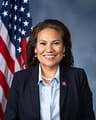 Veronica Escobar
Democrat · Texas
 Vicente Gonzalez
Democrat · Texas
 Suhas Subramanyam
Democrat · Virginia
 Eugene Vindman
Democrat · Virginia