
Tom Barrett (R-MI)
Protecting Local Control of Data Centers Act
A Republican bill with 4 Republican cosponsors · See all 4 cosponsors
Last activity — Referred to the House Committee on Energy and Commerce.
In committee
Introduced and handed to a committee in the chamber it started in.
The committee holds it, and most bills are never heard from again. A hearing or a committee vote would be news; silence is the usual outcome, and it kills the bill without anyone voting against it.
Its path through Congress
- Introduced
- In Committee
What this bill would do
This bill, titled the "Protecting Local Control of Data Centers Act," aims to protect the authority of state and local governments. It prohibits federal agencies from overriding or bypassing local land-use, zoning, siting, or permitting decisions regarding data centers located on non-Federal land. Additionally, the bill prevents federal agencies from using the receipt of Federal funds as a way to pressure states or local governments into giving up their authority.
Yes· 3 of 5
- Scored +7
Does this leave more decisions to the states?
The bill significantly strengthens state and local control over land-use and zoning for data centers.
- Scored +5
Does this better protect air, water and wildlife?
By maintaining local control over land-use and zoning, local communities can better enforce their own environmental and siting standards for data centers.
- Scored +5
Does this better protect public land such as parks and forests?
The bill strengthens local oversight of land-use decisions on non-Federal land.
The opposite
- Scored -5
Does this give the federal government more power?
The bill explicitly restricts federal agencies from overriding or bypassing local authority.
- Scored -3
Would business owners be better off under this?
Data center operators may face more fragmented or restrictive local regulations due to local control.
Who it would affect, and how
Potential Positive Impacts for People
-
Preservation of Local Authority: The bill prevents federal agencies from overriding or displacing State or local land-use, zoning, siting, or permitting authority for data centers on non-Federal land (Section 2). This ensures that local communities maintain control over how land is used in their own jurisdictions.
-
Protection Against Financial Pressure: Federal agencies are prohibited from conditioning the receipt of Federal funds on a State or local government relinquishing or limiting their authority (Section 2). This protects local governments from being forced to give up their regulatory powers in exchange for money.
Potential Negative Impacts for People
- No negative impacts are explicitly stated in the provided text.
Groups and Interests Ranking
Every group the model scored this bill for, from -10 to +10. Tap or hover a score for the reason it gave.
- Environment Energy And Infrastructure
- Does this better protect air, water and wildlife? — By maintaining local control over land-use and zoning, local communities can better enforce their own environmental and siting standards for data centers. Does this better protect public land such as parks and forests? — The bill strengthens local oversight of land-use decisions on non-Federal land.
- Education And Technology
- Does this put more rules on large technology companies? — It empowers local governments to regulate the physical presence and siting of data center infrastructure.
- Governance And Ideology
- Does this leave more decisions to the states? — The bill significantly strengthens state and local control over land-use and zoning for data centers. Does this give the federal government more power? — The bill explicitly restricts federal agencies from overriding or bypassing local authority.
- Demographic And Interest Groups
- Would people in rural areas be better off under this? — Rural residents often have more direct control over land-use decisions through local government. Would business owners be better off under this? — Data center operators may face more fragmented or restrictive local regulations due to local control.
- 9/3/2026
- 1 Cosponsor added.
- 9/2/2026
- 1 Cosponsor added.
- 9/1/2026
- 1 Cosponsor added.
- 8/31/2026
- 1 Cosponsor added.
- 8/20/2026
- Referred to the House Committee on Energy and Commerce.
- Introduced in House
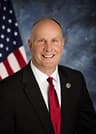 John Moolenaar
Republican · Michigan
 Christopher Smith
Republican · New Jersey
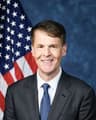 Jefferson Shreve
Republican · Indiana
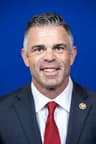 Tony Wied
Republican · Wisconsin