
Michael McCaul (R-TX)
Lindsey O. Graham Sanctioning Russia and Iran Act of 2026
A Republican bill with 12 Democratic cosponsors · See all 23 cosponsors
Last activity — Referred to the Committee on Foreign Affairs, and in addition to the Committees on the Judiciary, Oversight and Government Reform, Financial Services, Ways and Means, Rules, and Energy and Commerce, for a period to be subsequently determined by the Speaker, in each case for consideration of such provisions as fall within the jurisdiction of the committee concerned.
In committee
Introduced and handed to a committee in the chamber it started in.
The committee holds it, and most bills are never heard from again. A hearing or a committee vote would be news; silence is the usual outcome, and it kills the bill without anyone voting against it.
Its path through Congress
- Introduced
- In Committee
What this bill would do
This bill, titled the Lindsey O. Graham Sanctioning Russia and Iran Act of 2026, aims to impose strict sanctions and other economic measures against the Russian Federation. It targets Russian officials, financial institutions, state-owned entities, securities, investments, and energy sectors to penalize the government for its actions. Additionally, the legislation increases import duties on goods from Russia and on countries that purchase Russian crude oil or natural gas or help Russia evade sanctions. The bill also extends the Iran Sanctions Act of 1996 until the year 2031. Finally, most provisions of this act will sunset five years after being enacted.
Yes· 3 of 5
- Scored +7
Does this strengthen ties with allied countries?
Coordinates sanctions with the G7 and EU to target shared adversaries.
- Scored +6
Does this give the federal government more power?
Expands presidential authority to impose sanctions and duties on foreign entities.
- Scored +5
Does this better protect the country from computer attacks?
Targets foreign actors conducting malicious electronic attacks and cyberattacks on allies.
The opposite· 3 of 12
- Scored -5
Is this likely to lower the price at the pump?
Restrictions on Russian gas and oil imports could potentially increase energy costs.
- Scored -4
Does this make trade with other countries easier?
Imposes significant duties on imports from Russia and third-party countries that evade sanctions.
- Scored -3
Would high-income households be better off under this?
Prohibits new investments in the Russian Federation for US persons.
Who it would affect, and how
Potential Positive Impacts for People
-
Section 102(e)(2)(D): This provision targets foreign persons who engage in activities that undermine Ukraine's military readiness, democratic processes, territorial integrity, or commit serious human rights abuses against Ukrainian citizens. This can be viewed as positive because it holds bad actors accountable for harming innocent people and destabilizing the region.
-
Section 114(a): This section provides explicit exceptions for humanitarian assistance, ensuring that sanctions do not apply to the provision of agricultural commodities, food, medicine, medical devices, or humanitarian purposes. This is a positive outcome because it protects vulnerable populations from suffering due to broader economic sanctions.
-
Section 114(j): This provision ensures that sanctions do not apply to persons providing provisions to a vessel for the safety and care of the crew, the protection of human life, or to avoid environmental damage. This is a common-sense protection for ordinary workers and the environment.
Potential Negative Impacts for People
-
Section 112(a): This section requires the President to increase the rate of duty for all goods imported into the United States from the Russian Federation to a rate of up to 500 percent ad valorem. This could be considered a burden for everyday people because it may drive up the costs of certain imported goods and energy products.
-
Section 113(a): This provision increases the rate of duty up to 100 percent on all goods imported into the United States from specific foreign countries that purchase Russian crude oil or natural gas or facilitate sanctions evasion. This could negatively impact American consumers by increasing the prices of everyday goods imported from those nations.
-
Section 107: This section prohibits new investments and the exportation of certain services to the Russian Federation by any United States person. This could create financial burdens or disruptions for American workers and businesses that previously relied on trade or operations involving that region.
Groups and Interests Ranking
Every group the model scored this bill for, from -10 to +10. Tap or hover a score for the reason it gave.
- Demographic And Interest Groups
- Would billionaires be better off under this? — Limits investment opportunities in the Russian market. Would business owners be better off under this? — Restricts trade and investment opportunities in Russia and certain third-party countries. Would high-income households be better off under this? — Prohibits new investments in the Russian Federation for US persons. Would people with substantial wealth be better off under this? — Limits investment opportunities in the Russian market. Would the very wealthiest people be better off under this? — Limits investment opportunities in the Russian market. Would immigrants be better off under this? — Imposes strict visa and admission bans on specific Russian officials and affiliated persons. Would households on low incomes be better off under this? — Potential for increased costs of imported goods due to high tariffs. Would middle-income households be better off under this? — Potential for increased costs of imported goods due to high tariffs.
- National Security And Foreign Policy
- Does this strengthen ties with allied countries? — Coordinates sanctions with the G7 and EU to target shared adversaries. Does this better protect the country from computer attacks? — Targets foreign actors conducting malicious electronic attacks and cyberattacks on allies. Does this send more money or help to other countries? — Facilitates the use of immobilized Russian assets to service loans to Ukraine. Does this make trade with other countries easier? — Imposes significant duties on imports from Russia and third-party countries that evade sanctions.
- Governance And Ideology
- Does this give the federal government more power? — Expands presidential authority to impose sanctions and duties on foreign entities.
- Economy And Finance
- Is this likely to slow the rise in prices? — High duties on Russian and third-party imports could increase the cost of goods for consumers. Is this likely to grow the economy? — Investment prohibitions and trade restrictions may limit certain financial opportunities and market access.
- Environment Energy And Infrastructure
- Does this reduce how much oil, gas and coal is produced? — Prohibits investment in and import of Russian energy products. Is this likely to lower the price at the pump? — Restrictions on Russian gas and oil imports could potentially increase energy costs.
- 9/16/2026
- 2 Cosponsors added.
- 9/15/2026
- 2 Cosponsors added.
- 9/10/2026
- 2 Cosponsors added.
- 8/10/2026
- Referred to the Committee on Foreign Affairs, and in addition to the Committees on the Judiciary, Oversight and Government Reform, Financial Services, Ways and Means, Rules, and Energy and Commerce, for a period to be subsequently determined by the Speaker, in each case for consideration of such provisions as fall within the jurisdiction of the committee concerned.
- 17 Cosponsors added.
- Introduced in House
2 bills Congress.gov lists as related to this one — companions in the other chamber, earlier versions, and bills this one absorbed or was folded into.
 Jake Auchincloss
Democrat · Massachusetts
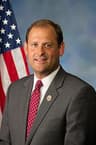 Andy Barr
Republican · Kentucky
 Don Bacon
Republican · Nebraska
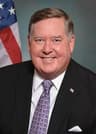 Ken Calvert
Republican · California
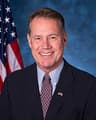 Ed Case
Democrat · Hawaii
 Brian Fitzpatrick
Republican · Pennsylvania
 Josh Gottheimer
Democrat · New Jersey
 Daniel Goldman
Democrat · New York
 Maggie Goodlander
Democrat · New Hampshire
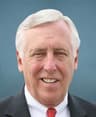 Steny Hoyer
Democrat · Maryland
 Chrissy Houlahan
Democrat · Pennsylvania
 Marcy Kaptur
Democrat · Ohio
 Thomas Kean
Republican · New Jersey
 Jennifer Kiggans
Republican · Virginia
 Nathaniel Moran
Republican · Texas
 Scott Peters
Democrat · California
 Mike Rogers
Republican · Alabama
 Michael Turner
Republican · Ohio
 Jill Tokuda
Democrat · Hawaii
 Gabe Vasquez
Democrat · New Mexico
 Eugene Vindman
Democrat · Virginia
 Joe Wilson
Republican · South Carolina
 Ann Wagner
Republican · Missouri