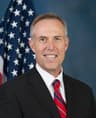
Jared Huffman (D-CA)
Critically Endangered Animals Conservation Act of 2026
A Democratic bill with 2 Republican cosponsors · See all 7 cosponsors
Last activity — Referred to the House Committee on Natural Resources.
In committee
Introduced and handed to a committee in the chamber it started in.
The committee holds it, and most bills are never heard from again. A hearing or a committee vote would be news; silence is the usual outcome, and it kills the bill without anyone voting against it.
Its path through Congress
- Introduced
- In Committee
What this bill would do
The Critically Endangered Animals Conservation Act of 2026 aims to assist in the conservation of critically endangered species in foreign countries. The Secretary of the Interior will manage a competitive grant program using the Critically Endangered Animals Conservation Fund. These grants are intended to help recover and sustain viable populations of species outside of the United States. Eligible applicants include foreign wildlife management authorities or experts with demonstrated capacity. The bill establishes specific goals for projects, such as habitat restoration and the prevention of illegal trade. It also creates a dedicated fund to support these conservation efforts through appropriations and donations.
Who it would affect, and how
Potential Positive Impacts for People
-
Species Recovery and Population Stability: The bill allows for grants that help recover and sustain viable populations of critically endangered species in the wild (Section 3(c)(1)(A)).
-
Scientific Knowledge Advancement: Funding can be used to develop sound scientific information regarding species' habitats, population trends, and threats to survival (Section 3(c)(1)(C)).
-
Enhanced Law Enforcement: The act supports training and capacity building for local law enforcement officials to prevent the illegal killing or trade of endangered species (Section 3(c)(2)(D)-(E)).
-
Community Involvement and Education: Projects can include community outreach, education, and strengthening the ability of local communities to implement conservation programs (Section 3(c)(2)(H)-(I)).
-
Conflict Resolution: The bill provides for initiatives designed to resolve conflicts between humans and critically endangered species (Section 3(c)(2)(F)).
Potential Negative Impacts for People
-
Restrictions on Captive Breeding: Grant funds may not be used for captive breeding unless it is specifically designed for release into the wild and no other conservation methods are biologically or technically feasible (Section 3(e)).
-
Ineligibility for Certain Groups: Any wildlife management authority or group that already receives funding for a specific species from certain multinational species conservation funds is ineligible for a grant under this Act for that same species (Section 3(b)(1)(B)).
-
Requirement for Local Consent: Certain project proposals may require the Secretary to determine that free, prior, and informed consent by indigenous peoples and local communities is necessary for the project's success (Section 3(b)(2)(C)).
- 11/5/2026
- 1 Cosponsor added.
- 9/3/2026
- 1 Cosponsor added.
- 8/31/2026
- 1 Cosponsor added.
- 8/10/2026
- Referred to the House Committee on Natural Resources.
- 4 Cosponsors added.
- Introduced in House
2 bills Congress.gov lists as related to this one — companions in the other chamber, earlier versions, and bills this one absorbed or was folded into.
 Vern Buchanan
Republican · Florida
 Salud Carbajal
Democrat · California
 Sean Casten
Democrat · Illinois
 Brian Fitzpatrick
Republican · Pennsylvania
 Raja Krishnamoorthi
Democrat · Illinois
 Kevin Mullin
Democrat · California
 Frank Pallone
Democrat · New Jersey