
Grace Meng (D-NY)
Early Childhood Educator Professional Improvement Act of 2026
A Democratic bill with 5 Democratic cosponsors · See all 5 cosponsors
Last activity — Referred to the House Committee on Education and Workforce.
In committee
Introduced and handed to a committee in the chamber it started in.
The committee holds it, and most bills are never heard from again. A hearing or a committee vote would be news; silence is the usual outcome, and it kills the bill without anyone voting against it.
Its path through Congress
- Introduced
- In Committee
What this bill would do
The Early Childhood Educator Professional Improvement Act of 2026 authorizes the Secretary of Health and Human Services to award grants to States. These grants aim to improve the knowledge, credentials, compensation, and professional development of early childhood educators. The program is intended to last for five-year periods, with the possibility of renewal. States must develop comprehensive professional development systems that include oversight, standards, and career ladders. Funds can be used for scholarships, increased compensation, and ongoing professional training. The Act also requires that these funds supplement, rather than replace, existing funding.
Yes· 3 of 13
- Scored +7
Would students be better off under this?
It provides significant financial aid via scholarships for those pursuing degrees.
- Scored +7
Does this make college cost less?
The bill provides scholarships and financial support for educators pursuing degrees.
- Scored +6
Would children be better off under this?
Improving the quality of early childhood educators directly benefits child development and learning.
The opposite
No question was scored the opposite.
Who it would affect, and how
Potential Positive Impacts for People
-
Financial Support for Education: Grants can provide scholarships to cover tuition, fees, materials, transportation, paid substitutes, and release time for educators pursuing a bachelor's degree (Section 6, Subsection 1).
-
Career Advancement for Degree Holders: The bill allows educators who already hold degrees in other fields to obtain specific credentials, licensure, or endorsements in early childhood education (Section 6, Subsection 2).
-
Improved Earnings: Funds are directed toward increasing compensation for educators making progress toward a degree and ensuring pay parity once they complete their degree (Section 6, Subsection 3).
-
Enhanced Professional Skills: Educators can access ongoing professional development covering child development, teacher-child interaction, family engagement, and cultural competence (Section 6, Subsection 4).
-
Increased Accessibility for Working Students: The bill encourages higher education opportunities that are accessible in terms of time and location, specifically mentioning rural areas (Section 5, Subsection 3, Clause F).
-
Support for Diverse Learners: The system aims to provide support for students who are dual language learners or from low-income or minority communities (Section 5, Subsection 3, Clause G).
Potential Negative Impacts for People
-
Funding Limitations: Grant funding is subject to the availability of appropriations, which could impact the consistency of the program (Section 4, Subsection a).
-
Strict State Financial Requirements: States receiving these funds are required to maintain their own fiscal effort at a level equal to or greater than the previous year, which places a specific financial obligation on the State (Section 8).
Groups and Interests Ranking
Every group the model scored this bill for, from -10 to +10. Tap or hover a score for the reason it gave.
- Demographic And Interest Groups
- Would students be better off under this? — It provides significant financial aid via scholarships for those pursuing degrees. Would children be better off under this? — Improving the quality of early childhood educators directly benefits child development and learning. Would households on low incomes be better off under this? — The bill supports students from low-income communities through scholarships. Would people with disabilities be better off under this? — The bill emphasizes professional training for working with children with special needs. Would people in rural areas be better off under this? — The bill specifically calls attention to providing accessible education for rural areas. Would people in their twenties and thirties be better off under this? — The bill provides scholarship opportunities for those pursuing higher education.
- Social Issues And Justice
- Does this expand the rights of people with disabilities? — The bill includes training for educators to work with children with special needs. Does this narrow racial gaps in how people are treated? — The bill provides specific support for students from minority communities and promotes cultural competence. Does this make child care cost less? — Improving educator credentials and compensation can help stabilize and professionalize childcare services. Is this likely to lift people out of poverty? — By increasing wages and providing scholarships, the bill aids low-income educators.
- Education And Technology
- Does this make college cost less? — The bill provides scholarships and financial support for educators pursuing degrees. Does this reduce what student borrowers owe or repay? — Scholarships help cover the costs of tuition and fees for educators.
- Environment Energy And Infrastructure
- Does this invest in rural communities? — The bill emphasizes accessible higher education for working students in rural areas.
- 9/1/2026
- 1 Cosponsor added.
- 8/6/2026
- Referred to the House Committee on Education and Workforce.
- 4 Cosponsors added.
- Introduced in House
One bill Congress.gov lists as related to this one — companions in the other chamber, earlier versions, and bills this one absorbed or was folded into.
 Yvette Clarke
Democrat · New York
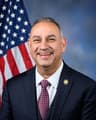 Gilbert Cisneros
Democrat · California
 Jesús García
Democrat · Illinois
 Eleanor Norton
Democrat · District of Columbia
 Lateefah Simon
Democrat · California