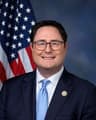
Mike Flood (R-NE)
Uniform Vehicle Safety Standards Act of 2026
A Republican bill with 4 Republican cosponsors · See all 4 cosponsors
Last activity — Referred to the House Committee on Energy and Commerce.
In committee
Introduced and handed to a committee in the chamber it started in.
The committee holds it, and most bills are never heard from again. A hearing or a committee vote would be news; silence is the usual outcome, and it kills the bill without anyone voting against it.
Its path through Congress
- Introduced
- In Committee
What this bill would do
This bill, known as the "Uniform Vehicle Safety Standards Act of 2026," proposes changes to title 49 of the United States Code. It aims to amend how motor vehicle safety standards are applied. Specifically, it seeks to prohibit liability at common law for manufacturers who fail to equip a vehicle beyond the required safety standards. The goal is to ensure uniform application of standards set by the National Highway Traffic Safety Administration. Additionally, the bill intends to relieve burdens on interstate commerce caused by common law suits.
Yes· 3 of 4
- Scored +6
Would business owners be better off under this?
Automotive manufacturers benefit significantly from reduced litigation risk and more predictable safety standards.
- Scored +5
Does this make it easier to do business across state lines?
The bill seeks to reduce unreasonable burdens on interstate commerce by standardizing liability.
- Scored +5
Is this likely to grow the economy?
The bill aims to reduce burdens on interstate commerce, which can facilitate easier movement of goods and services.
The opposite· 3 of 5
- Scored -4
Does this give people more protection from unfair business practices?
The bill limits consumer ability to seek legal recourse if a vehicle fails to meet safety standards beyond the regulatory minimum.
- Scored -2
Does this leave more decisions to the states?
The bill limits common law, which is often a state-level legal mechanism, in favor of federal standards.
- Scored -2
Does this protect the right to fair treatment by the courts?
The bill restricts certain types of litigation that could be used to seek justice under common law.
Who it would affect, and how
Potential Positive Impacts for People
-
Relief of burdens on interstate commerce: The bill aims to reduce the unreasonable burden on commerce by preventing common law suits from supplanting established motor vehicle safety standards (Section 2).
-
Uniform application of standards: This act seeks to ensure that the motor vehicle safety standards created by the National Highway Traffic Safety Administration are applied uniformly (Section 2).
Potential Negative Impacts for People
- Prohibition of liability for exceeding standards: The bill would exempt manufacturers from common law liability if they fail to manufacture or equip a vehicle to an extent that goes beyond the required safety standards (Section 3).
Groups and Interests Ranking
Every group the model scored this bill for, from -10 to +10. Tap or hover a score for the reason it gave.
- Governance And Ideology
- Does this make it easier to do business across state lines? — The bill seeks to reduce unreasonable burdens on interstate commerce by standardizing liability. Does this give the federal government more power? — The bill reinforces the authority of federal safety standards over common law. Does this protect the right to fair treatment by the courts? — The bill restricts certain types of litigation that could be used to seek justice under common law. Does this leave more decisions to the states? — The bill limits common law, which is often a state-level legal mechanism, in favor of federal standards.
- Demographic And Interest Groups
- Would business owners be better off under this? — Automotive manufacturers benefit significantly from reduced litigation risk and more predictable safety standards. Would households on low incomes be better off under this? — Limiting liability may reduce the ability of lower-income individuals to seek damages for safety-related harms. Would people with disabilities be better off under this? — Reducing liability might limit pathways to addressing safety issues that affect vulnerable populations.
- Economy And Finance
- Is this likely to grow the economy? — The bill aims to reduce burdens on interstate commerce, which can facilitate easier movement of goods and services. Does this give people more protection from unfair business practices? — The bill limits consumer ability to seek legal recourse if a vehicle fails to meet safety standards beyond the regulatory minimum.
- 9/2/2026
- 1 Cosponsor added.
- 8/6/2026
- Referred to the House Committee on Energy and Commerce.
- 3 Cosponsors added.
- Introduced in House
One bill Congress.gov lists as related to this one — companions in the other chamber, earlier versions, and bills this one absorbed or was folded into.
 Jake Ellzey
Republican · Texas
 Richard Hudson
Republican · North Carolina
 Jay Obernolte
Republican · California
 David Rouzer
Republican · North Carolina