
Keith Self (R-TX)
Denouncing Sharia law in the United States.
A Republican resolution with 9 Republican cosponsors · See all 9 cosponsors
Last activity — Referred to the House Committee on the Judiciary.
In committee
Introduced and handed to a committee in the chamber it started in.
The committee holds it, and most bills are never heard from again. A hearing or a committee vote would be news; silence is the usual outcome, and it kills the bill without anyone voting against it.
Its path through Congress
- Introduced
- In Committee
A concurrent resolution is how the House and the Senate settle something they do together, such as a budget plan or a joint session. It is adopted once both chambers agree to it, and that puts it into effect; it is not a law, so it does not go to the President.
What this bill would do
This text is a resolution introduced in the House of Representatives to denounce Sharia law in the United States. It outlines various arguments stating that Sharia law functions as a political and legal order that conflicts with the United States Constitution. The text claims that Sharia law threatens individual liberties, equal rights, women's rights, and democratic principles. It mentions historical interactions and examples from other countries to support its claims about the nature of Sharia law. Finally, the resolution states that Congress officially denounces Sharia law in all forms and opposes its implementation within the United States.
Yes· 3 of 6
- Scored +5
Does this give the federal government more power?
The resolution emphasizes the supremacy of the U.S. Constitution over any foreign legal or political system.
- Scored +5
Does this protect the individual right to speak freely?
The bill asserts that protecting constitutional values includes protecting free speech from religious-based restrictions.
- Scored +5
Does this protect the right to fair treatment by the courts?
The resolution seeks to ensure that constitutional due process remains the standard for all individuals.
The opposite
- Scored -5
Does this protect the freedom to practise a religion?
The resolution's denouncement of a specific religious legal framework may be perceived as a restriction on religious expression or pluralism.
- Scored -5
Would immigrants be better off under this?
The denouncement of Sharia may create a hostile environment or negative perception for Muslim immigrants.
Who it would affect, and how
Potential Positive Impacts for People
-
Preserving Constitutional Supremacy: The text states that the Constitution of the United States and its laws are the supreme law of the land, and that any legal doctrine placing itself above the Constitution threatens the stability and unity of the nation. This could be seen as positive for people who value upholding the existing constitutional order.
-
Protecting Individual Rights: The text points out that Sharia law restricts religious freedom, free speech, and individual autonomy, while the United States Constitution guarantees equal rights, due process, and individual autonomy. Opposing Sharia law might be viewed as a way to protect these guaranteed constitutional rights for individuals in the United States.
Potential Negative Impacts for People
- Based on the explicit text provided in this resolution, there are no specific sections or provisions that identify negative outcomes, consequences, or burdens for individuals or groups of people in the United States resulting from the resolution itself. The text focuses entirely on denouncing Sharia law and detailing its alleged negative impacts on people.
Groups and Interests Ranking
Every group the model scored this bill for, from -10 to +10. Tap or hover a score for the reason it gave.
- Governance And Ideology
- Does this protect the right to fair treatment by the courts? — The resolution seeks to ensure that constitutional due process remains the standard for all individuals. Does this protect the individual right to speak freely? — The bill asserts that protecting constitutional values includes protecting free speech from religious-based restrictions. Does this give the federal government more power? — The resolution emphasizes the supremacy of the U.S. Constitution over any foreign legal or political system.
- Social Issues And Justice
- Does this protect what people are allowed to say in public life? — The bill seeks to protect free speech by opposing legal systems that penalize blasphemy or dissent. Does this narrow the gap between how men and women are treated? — The resolution argues that opposing Sharia law upholds gender equality by challenging systems where women are treated as subservient. Does this protect the freedom to practise a religion? — The resolution's denouncement of a specific religious legal framework may be perceived as a restriction on religious expression or pluralism.
- Demographic And Interest Groups
- Would women be better off under this? — The resolution claims to protect women by opposing a legal system that treats them as subservient to men. Would immigrants be better off under this? — The denouncement of Sharia may create a hostile environment or negative perception for Muslim immigrants.
- 9/3/2026
- Submitted in House
- Referred to the House Committee on the Judiciary.
- 9 Cosponsors added.
 Josh Brecheen
Republican · Oklahoma
 Earl Carter
Republican · Georgia
 Elijah Crane
Republican · Arizona
 Clay Fuller
Republican · Georgia
 Paul Gosar
Republican · Arizona
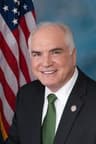 Mike Kelly
Republican · Pennsylvania
 Barry Moore
Republican · Alabama
 Derrick Van Orden
Republican · Wisconsin
 Randy Weber
Republican · Texas